
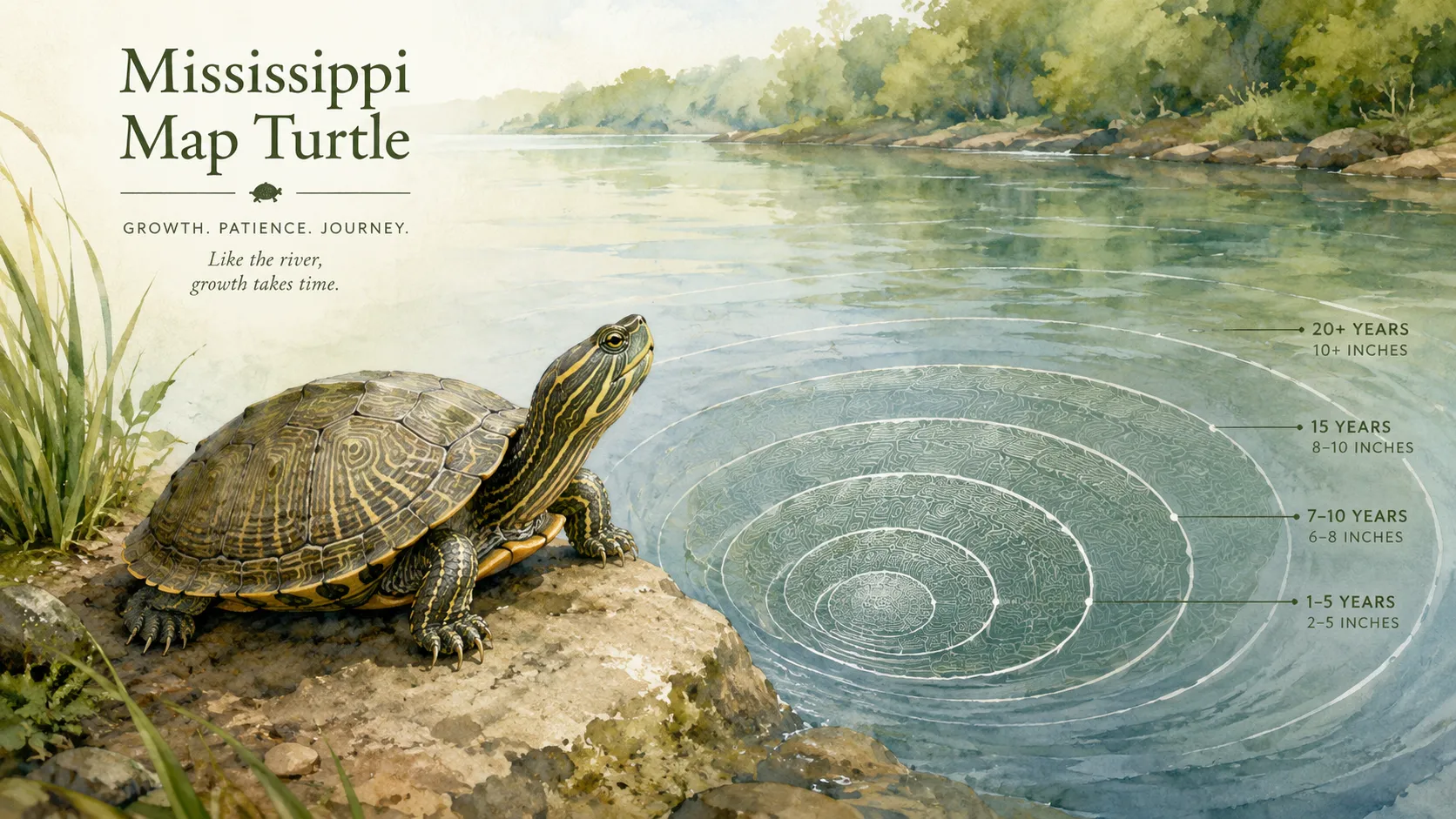
If you have ever watched a tiny Mississippi map turtle paddling through the water at a pet shop, you probably wondered just how large that adorable little reptile could eventually become. The answer surprises many first-time turtle owners. These turtles may begin life smaller than a golf ball, but with the right care, they can grow into impressive aquatic reptiles that require serious space and long-term commitment. One of the biggest surprises is the dramatic size difference between males and females. A fully grown female can end up more than twice the size of a male, which completely changes the kind of tank and care setup required later on.
The Mississippi map turtle is known scientifically as Graptemys pseudogeographica kohni. It belongs to the map turtle family, a group famous for intricate shell markings that resemble contour lines on a map. These turtles are native to river systems connected to the Mississippi River and thrive in waterways with plenty of basking spots and moving water. Their striking appearance, manageable temperament, and active swimming behavior make them extremely popular among reptile enthusiasts. Still, their growth rate, shell health, and adult size depend heavily on the quality of care they receive during the first few years of life.
Understanding how large a Mississippi map turtle can get is not only important for curiosity’s sake. It directly affects tank size, filtration needs, diet planning, and long-term housing expenses. Many owners accidentally stunt their turtle’s growth or create serious health problems simply because they underestimate how quickly these turtles mature. By learning how growth works and what healthy development looks like, you can avoid common mistakes and help your turtle live a healthier and potentially longer life.
Understanding the Mississippi Map Turtle
Natural Range and Habitat
Mississippi map turtles naturally inhabit rivers, lakes, and large streams across parts of the southern and central United States. They especially favor waterways with strong currents, fallen logs, and open basking sites where they can warm themselves under the sun. Unlike some semi-aquatic turtles that spend a lot of time walking on land, map turtles are highly aquatic and prefer remaining in the water almost constantly. Their streamlined bodies and webbed feet make them excellent swimmers, almost like tiny freshwater torpedoes darting through river currents.
These turtles are naturally shy and cautious. In the wild, they often dive into the water the second they sense danger. That nervous personality carries into captivity as well. Owners frequently notice that Mississippi map turtles dislike excessive handling and become stressed easily. Stress itself can influence appetite, growth rate, and overall health, which is why habitat quality matters so much. Clean water, low stress, and proper basking opportunities are absolutely essential for healthy development.
Their natural habitat also explains why they need such powerful filtration systems in captivity. Rivers constantly flush waste away, but aquariums do not. A poorly filtered enclosure can quickly become dangerous because turtles produce large amounts of waste. Dirty water contributes to shell infections, fungal issues, respiratory disease, and poor growth. Replicating their natural environment as closely as possible gives them the best chance at reaching full adult size safely and naturally.
Why This Species Is Popular Among Turtle Owners
Mississippi map turtles attract reptile lovers because they combine beauty with fascinating behavior. Their shells feature thin yellow lines and circular patterns that look almost hand-painted. One especially recognizable trait is the bright yellow crescent marking behind each eye, making them easy to identify compared to other map turtle species.
Another reason they are popular is their relatively manageable size compared to larger aquatic turtles like red-eared sliders or snapping turtles. Male Mississippi map turtles often remain fairly compact throughout life, making them appealing for hobbyists with limited space. Female turtles, however, are a completely different story. Many inexperienced owners buy hatchlings without realizing they may eventually need a tank exceeding 100 gallons if the turtle turns out to be female.
Their active swimming behavior also makes them entertaining pets. Unlike sedentary reptiles that remain hidden most of the day, map turtles are curious and constantly moving. Watching one swim gracefully through the water is almost hypnotic. Many owners compare them to underwater birds because of how effortlessly they glide. Still, their care level is considered moderate to difficult because they require pristine water conditions, UVB lighting, and balanced nutrition to stay healthy long term.
Typical Size Differences Between Males and Females
Average Male Size
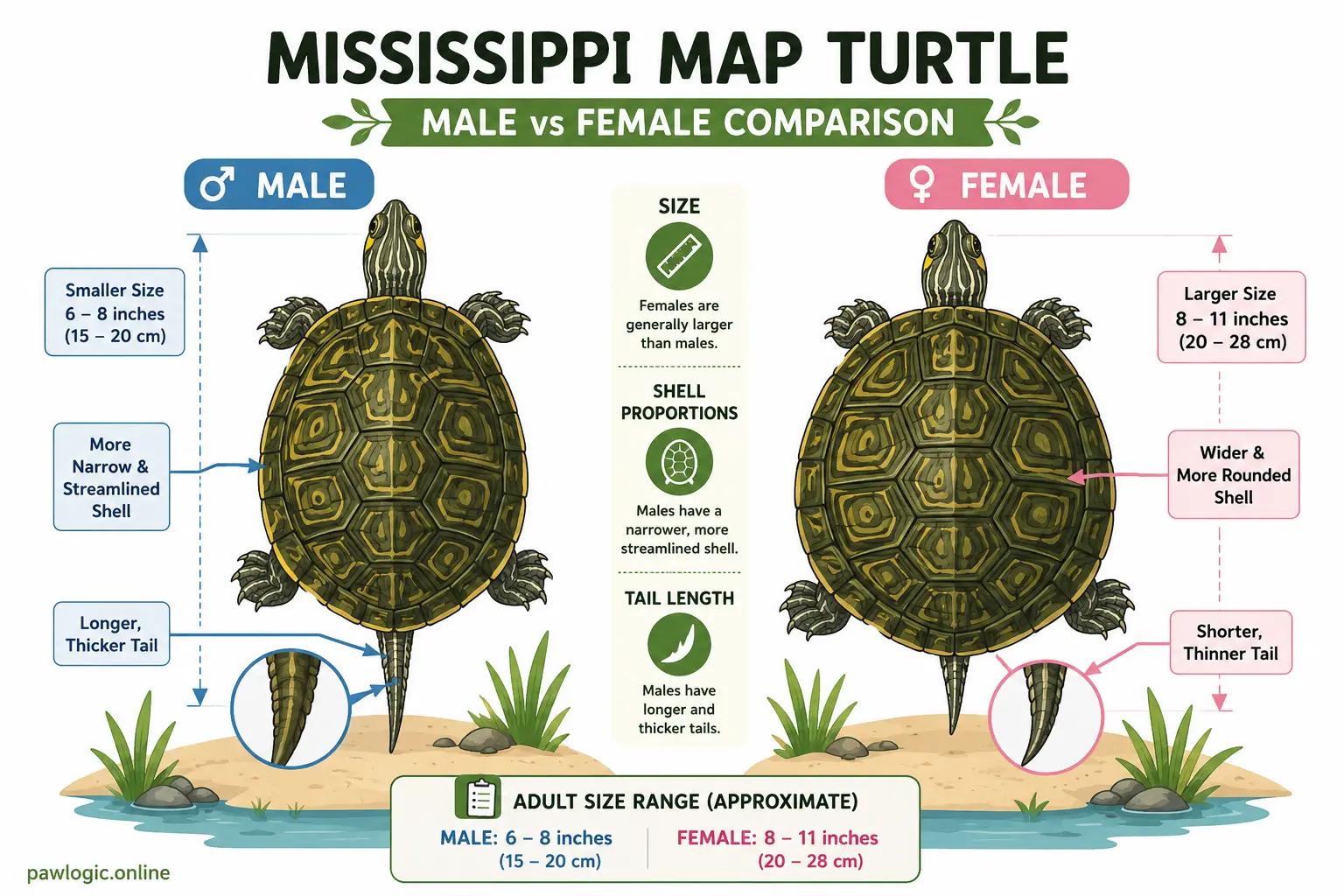
Male Mississippi map turtles stay surprisingly small for aquatic turtles. Adult males typically reach a shell length of about 3.5 to 5 inches. Some exceptionally healthy males may exceed this range slightly, but most remain compact throughout adulthood.
This smaller size makes males easier to house and maintain. A properly designed 40- to 55-gallon tank can often accommodate an adult male comfortably if filtration and swimming space are adequate. Male turtles also tend to mature faster than females. Many begin reaching sexual maturity around three to five years old, though growth continues slowly afterward.
Males usually have longer tails and elongated front claws compared to females. These physical traits help distinguish their sex once they mature. Their smaller body mass also means they generally eat less and create less waste than females, making maintenance somewhat easier for keepers. For beginner turtle owners, a male Mississippi map turtle is often considered the more practical option.
Average Female Size
Female Mississippi map turtles are dramatically larger than males. Adult females commonly grow between 6 and 10 inches in shell length, with some exceptionally large individuals approaching the upper limit under ideal conditions.
This huge size gap catches many owners off guard. Imagine buying a tiny hatchling and later discovering your turtle requires a tank larger than many household aquariums. Females also develop broader heads and more powerful jaws because they often consume harder prey such as snails and mollusks in the wild. Their increased body mass demands stronger filtration systems, larger basking platforms, and significantly more swimming room.
A female map turtle can easily require a 75- to 125-gallon setup by adulthood depending on her exact size and activity level. Some experienced keepers even move large females into outdoor ponds in suitable climates. Planning ahead is critical because cramped conditions can cause stress, obesity, shell deformities, and reduced lifespan.
Why Females Grow Much Larger
The enormous size difference between males and females is called sexual dimorphism. In Mississippi map turtles, females evolved larger bodies mainly to support reproduction. Bigger females can carry and lay more eggs, increasing reproductive success in the wild. It is nature’s version of investing in future generations.
Males, on the other hand, benefit from remaining smaller and more agile. Their reduced size allows them to mature faster and move efficiently through river systems. Smaller males also require fewer resources, which can be advantageous in competitive environments.
This difference influences nearly every aspect of care in captivity. Feeding schedules, tank dimensions, and even basking dock sizes should eventually be adjusted depending on the turtle’s sex. Since hatchlings cannot always be sexed accurately, many keepers wisely prepare for the possibility of a much larger female as the turtle matures.
How Fast Mississippi Map Turtles Grow Over Time
Hatchling Growth During the First Year
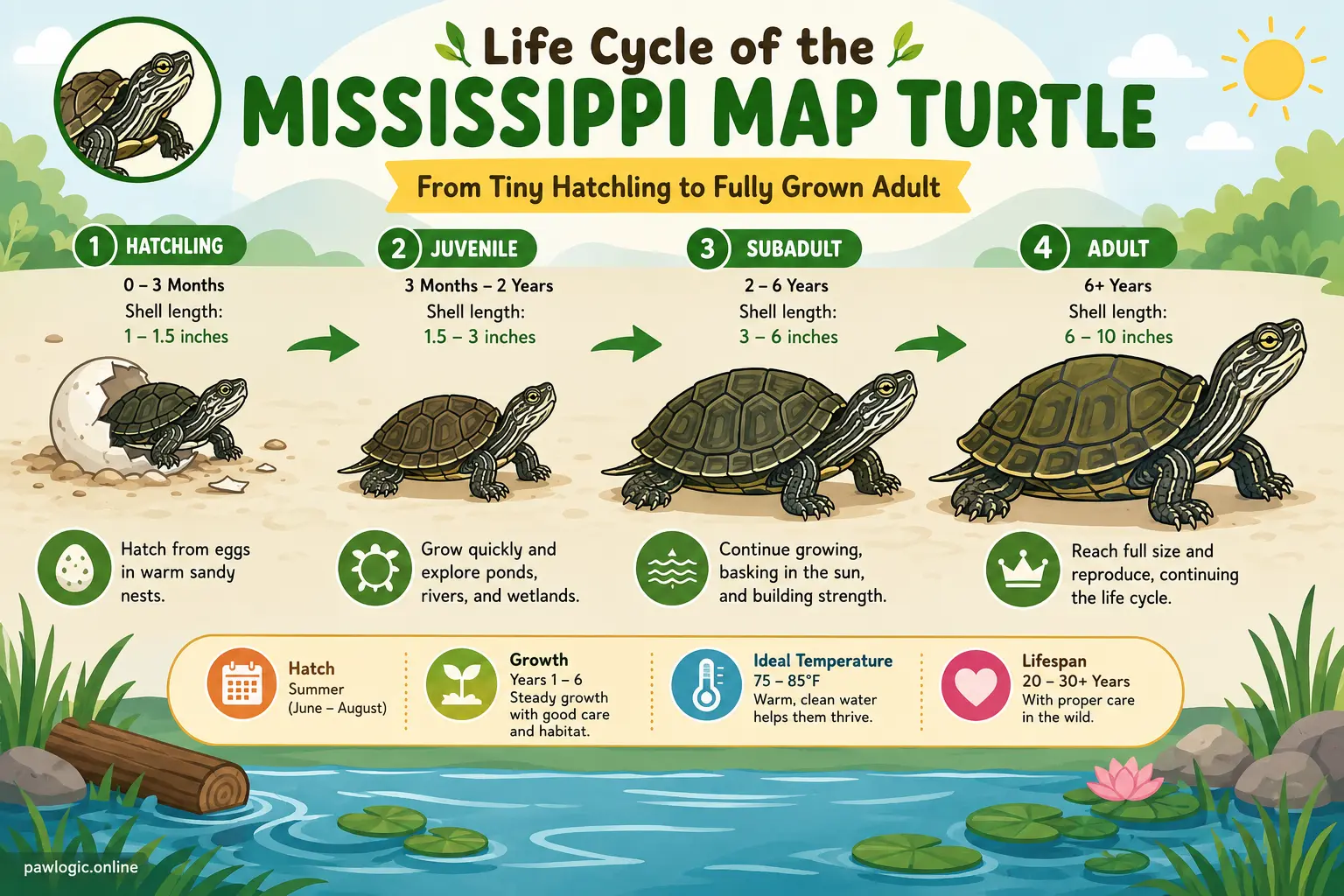
Baby Mississippi map turtles grow rapidly during their first year of life. Hatchlings usually measure just over one inch in shell length when they emerge from the egg. Under ideal conditions, they can double or even triple in size within the first twelve months.
Growth during this stage depends heavily on nutrition, temperature, UVB exposure, and water quality. Hatchlings require protein-rich diets because their bodies are developing rapidly. Commercial turtle pellets, insects, small aquatic prey, and occasional leafy greens all contribute to healthy growth. Missing even one important element, such as UVB lighting, can disrupt shell formation and bone development.
Young turtles are especially vulnerable to stress and disease. Dirty water can quickly lead to infections, while improper temperatures may suppress appetite. Think of hatchlings like delicate seedlings in a garden. Even though they are genetically programmed to grow, their environment determines whether they flourish or struggle.
Juvenile Growth Stages
Between ages one and five, Mississippi map turtles continue growing steadily. Males generally grow faster early on because they reach maturity sooner. Females often experience extended growth periods lasting six to ten years or longer.
At this stage, owners often begin noticing sex-related differences. Females start gaining size more aggressively, while males remain slimmer and lighter. Diet becomes increasingly important because overfeeding during juvenile stages can lead to obesity and abnormal shell growth. Many turtle owners mistakenly assume rapid growth always means good health, but excessive growth caused by high-fat diets may actually create long-term health issues.
Consistent basking is another major factor. Turtles require UVB lighting to synthesize vitamin D3, which helps them absorb calcium properly. Without calcium metabolism functioning correctly, shells can become soft, misshapen, or pyramided.
When They Reach Full Adult Size
Male Mississippi map turtles typically reach adult size around four to six years old. Females usually continue growing until approximately eight to ten years of age, though minor growth may continue slowly beyond that point.
Growth naturally slows with age. Adult turtles focus less on rapid body expansion and more on maintaining healthy body condition. At this stage, long-term care becomes about stability rather than maximizing growth. A mature turtle thrives on routine: clean water, proper basking temperatures, balanced nutrition, and minimal stress.
Interestingly, turtles never truly stop growing entirely. Like many reptiles, they may continue adding tiny amounts of size throughout life, although the changes become extremely gradual after maturity.
Tank Space Needs as They Reach Adult Size
Minimum Tank Requirements for Males
Housing an adult male Mississippi map turtle requires more planning than many people expect. Because these turtles are highly active swimmers, floor space and water depth matter just as much as gallon capacity. Most experts recommend at least a 40- to 55-gallon aquarium for a fully grown male.
A good rule many turtle keepers follow is providing roughly 10 gallons of water per inch of shell length. That guideline is not perfect, but it gives owners a realistic starting point. Since males stay relatively small, they are easier to manage indoors compared to females. Still, they need deep water for proper swimming exercise and a dry basking platform where they can completely leave the water.
Strong filtration is essential because map turtles are messy eaters. Many keepers use canister filters rated for tanks twice the actual aquarium size. Without powerful filtration, waste accumulates rapidly and water quality deteriorates. Poor water conditions can trigger shell rot, fungal growth, and respiratory illness surprisingly quickly.
Space Requirements for Females
Adult female Mississippi map turtles demand substantially larger enclosures. A 75-gallon aquarium is generally considered the bare minimum, while many experienced keepers prefer 100 gallons or more.
Why so much space? Female turtles are not only larger but also heavier-bodied and extremely active. Cramped environments restrict swimming behavior and contribute to stress-related health problems. Imagine trying to live your entire life in a tiny bathroom. Even if survival is technically possible, quality of life suffers dramatically.
Large females also produce more waste, increasing filtration demands. Many turtle enthusiasts eventually transition females into custom indoor ponds or outdoor setups because maintaining enormous aquariums becomes expensive and physically demanding. Owners should honestly evaluate their long-term space and budget before committing to a hatchling whose sex is still unknown.
Filtration and Swimming Space Importance
Swimming space is not just about comfort. It directly influences muscle development, shell health, and overall fitness. Mississippi map turtles evolved in moving rivers where they constantly swim against currents. Limited exercise opportunities can contribute to obesity and lethargy in captivity.
Filtration quality matters equally. Crystal-clear water is not simply about appearance; it is about preventing bacterial buildup and maintaining healthy skin and shell tissue. Many experienced keepers recommend oversized canister filters combined with partial weekly water changes to maintain stability.
Basking areas are another non-negotiable requirement. Turtles need fully dry basking zones with proper heat and UVB lighting to regulate metabolism and maintain shell integrity. Without basking opportunities, even large tanks can become unhealthy environments.
Diet and Habitat Factors That Influence Growth
Best Foods for Healthy Growth
Diet acts like fuel for turtle development. Young Mississippi map turtles are more carnivorous and require protein-rich foods to support rapid growth. High-quality aquatic turtle pellets should form the dietary foundation because they provide balanced vitamins and minerals. Insects, earthworms, shrimp, snails, and occasional fish can also be offered in moderation.
As turtles mature, especially females, many begin incorporating more vegetation into their diets. Leafy greens such as romaine lettuce, dandelion greens, and aquatic plants provide fiber and important nutrients. Variety is essential because feeding only one food source can create nutritional deficiencies over time.
Calcium deserves special attention. Without enough calcium, turtles cannot build strong shells or bones. Many owners use cuttlebone or calcium supplements to support healthy shell development. A balanced diet paired with proper UVB exposure creates the foundation for steady and healthy growth.
UVB Lighting and Water Quality
Even the best diet fails without proper lighting. UVB bulbs allow turtles to produce vitamin D3, which enables calcium absorption. Without UVB, turtles may develop metabolic bone disease, soft shells, and severe deformities.
Water temperature also affects metabolism and appetite. Juveniles generally thrive in slightly warmer water than adults. If water becomes too cold, turtles often stop eating and grow poorly. Conversely, excessively warm water may encourage bacterial growth and stress.
Clean water cannot be overstated. Mississippi map turtles are particularly sensitive to poor water quality. Chronic exposure to dirty conditions weakens the immune system and slows healthy development. Consistent maintenance routines are one of the most important parts of successful turtle keeping.
Common Feeding Mistakes
One common mistake is overfeeding protein. While young turtles need protein for growth, excessive amounts can cause obesity and abnormal shell growth. Freeze-dried shrimp, often marketed heavily for turtles, should only be occasional treats because they lack balanced nutrition.
Another issue is relying entirely on feeder fish. Some fish contain enzymes that interfere with vitamin absorption when fed excessively. Variety prevents these problems and creates more balanced nutrition overall.
Owners also sometimes underestimate portion control. Turtles will often beg for food constantly, even when already overweight. Feeding behavior should not always determine feeding schedules. Responsible portion management helps maintain healthy body condition throughout life.
What Healthy Shell Development Should Look Like
Signs of a Healthy Shell
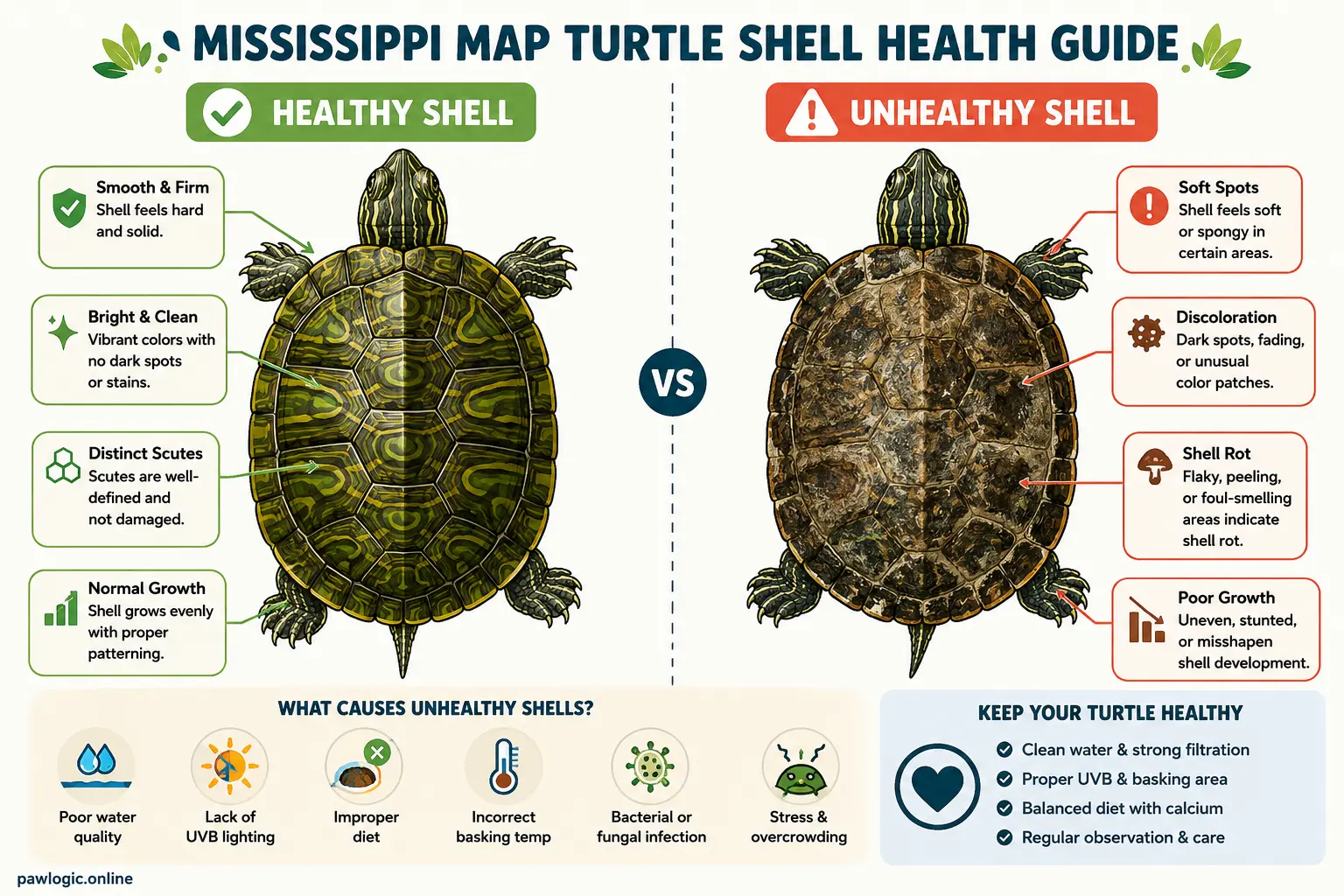
A healthy Mississippi map turtle shell should appear firm, smooth, and symmetrical. The shell typically displays olive or brown coloring with bright yellow map-like markings. Young turtles often show more vivid patterns, while older turtles may experience gradual fading over time.
Healthy shells feel hard to the touch and should not appear soft or spongy. Mild shedding is normal as turtles grow, but layers should peel cleanly rather than flake irregularly. Proper basking allows the shell to dry fully, reducing fungal and bacterial risks.
Growth rings may appear on shell scutes as the turtle matures. These rings are normal and somewhat similar to tree rings, though they do not precisely indicate age. Even growth across the shell usually suggests good nutrition and stable living conditions.
Shell Problems Caused by Poor Care
Shell issues often reveal underlying husbandry mistakes. Soft shells commonly indicate calcium deficiency or lack of UVB exposure. Pyramiding, where scutes rise unevenly, may develop from overfeeding or improper nutrition.
Shell rot is another serious concern. It often begins as discolored patches, foul smells, or soft areas caused by bacterial or fungal infection. Poor water quality and inadequate basking opportunities are major contributors.
Untreated shell problems can become life-threatening because the shell is living tissue connected to nerves and blood supply. Regular observation helps owners identify issues before they become severe.
Common Growth Problems Linked to Poor Care
Stunted Growth
Stunted growth occurs when turtles fail to reach normal adult size because of inadequate care. Poor diet, insufficient UVB lighting, chronic stress, overcrowding, and dirty water can all contribute to stunting.
A stunted turtle may appear permanently undersized with abnormal body proportions. Unfortunately, severe stunting during early development may not be fully reversible later. Prevention is far easier than treatment.
Metabolic Bone Disease
Metabolic bone disease is one of the most devastating health problems seen in captive turtles. It results from calcium imbalance and inadequate UVB exposure. Symptoms include soft shells, swollen limbs, tremors, and weakness.
This disease essentially causes the body to rob calcium from bones and shell tissue because proper metabolism cannot occur. Severe cases may lead to permanent deformities or death.
Obesity and Overfeeding
Obesity is surprisingly common among pet turtles. Owners often interpret constant begging as hunger, but turtles are opportunistic feeders by nature. Excessive feeding combined with limited exercise creates unhealthy fat accumulation.
Overweight turtles may develop difficulty swimming and increased strain on internal organs. Moderation and balanced feeding schedules are key to maintaining long-term health.
Comparing Mississippi Map Turtles to Other Map Turtle Species
Size Comparison Table
| Species | Male Size | Female Size |
|---|---|---|
| Mississippi Map Turtle | 3.5–5 inches | 6–10 inches |
| Common Map Turtle | 3.5–6.5 inches | 7–10.5 inches |
| Ouachita Map Turtle | 3.5–6 inches | 7–10.5 inches |
| Texas Map Turtle | 3–5 inches | 5–10 inches |
Mississippi map turtles fall into the medium-size range compared to other map turtles. Their care needs are fairly similar across the genus, though slight differences exist in temperament and environmental preferences.
Differences in Temperament and Care
Mississippi map turtles are generally shy and stress-sensitive. Compared to some sliders or cooters, they tolerate handling poorly and prefer calm environments. Their swimming activity level is high, meaning they require deeper water and stronger filtration than many beginner turtle species.
Females also become powerful shell-crushers capable of eating hard-shelled prey. This dietary preference reflects their broader heads and stronger jaws compared to males.
What to Expect From a Fully Mature Turtle
Adult Behavior and Lifespan
A mature Mississippi map turtle is active, observant, and surprisingly intelligent in its routines. Many learn feeding schedules and recognize their owners visually. Despite this, they still prefer minimal physical handling.
With proper care, these turtles commonly live 15 to 25 years, while some individuals exceed 30 years in captivity. Long lifespan means owning one is closer to adopting a long-term companion than buying a short-lived pet.
Adult turtles spend much of the day alternating between swimming, basking, and exploring their environment. Healthy adults maintain strong appetites, alert eyes, and smooth swimming movements.
Long-Term Commitment for Owners
Keeping a Mississippi map turtle successfully requires patience, planning, and consistent maintenance. Expenses increase significantly as turtles grow larger, especially for female turtles requiring enormous tanks and industrial-strength filtration systems.
Many turtles are surrendered because owners underestimate these long-term responsibilities. Before bringing one home, prospective keepers should honestly evaluate whether they can provide decades of care and proper housing.
Still, for dedicated reptile enthusiasts, these turtles can become deeply rewarding pets. Watching a tiny hatchling mature over years into a healthy adult is an incredibly satisfying experience.
Conclusion
Mississippi map turtles may start life tiny, but they can become surprisingly large and demanding aquatic reptiles over time. Adult males usually remain around 3.5 to 5 inches, while females can grow between 6 and 10 inches and require dramatically more space. Their growth depends heavily on proper diet, clean water, UVB lighting, and low-stress living conditions.
Healthy shell development serves as a visible indicator of good care, while issues like soft shells, pyramiding, and stunted growth often point toward husbandry mistakes. Owners who understand these needs early can avoid many common health problems and provide environments that support healthy long-term growth.
Compared to other map turtle species, Mississippi maps are especially admired for their striking shell patterns and active swimming behavior. They are fascinating reptiles, but they are not low-maintenance pets. A fully mature turtle requires dedication, space, and consistent care for decades. For prepared owners, though, few aquatic turtles are as rewarding to watch and care for.
FAQs
1. How big does a male Mississippi map turtle usually get?
Adult males typically reach between 3.5 and 5 inches in shell length. They remain much smaller than females throughout life.
2. How large can a female Mississippi map turtle become?
Females commonly grow between 6 and 10 inches long, though exceptionally healthy individuals may approach the upper end of that range.
3. How long does it take for a Mississippi map turtle to reach full size?
Males usually mature within four to six years, while females may continue growing for eight to ten years or longer.
4. What size tank does an adult Mississippi map turtle need?
Adult males generally require at least 40 to 55 gallons, while females often need 75 to 125 gallons or larger.
5. What causes unhealthy shell growth in map turtles?
Poor nutrition, lack of UVB lighting, dirty water, and calcium deficiency are the most common causes of shell deformities and unhealthy growth.

Merrick Nash is a 40-year-old American content creator from Madison, Wisconsin. He has built a reputation for publishing in-depth guides and expert blog articles for pawlogic.online, combining years of digital publishing experience with careful research and an editorial approach that values clarity, credibility, and helpful advice.