
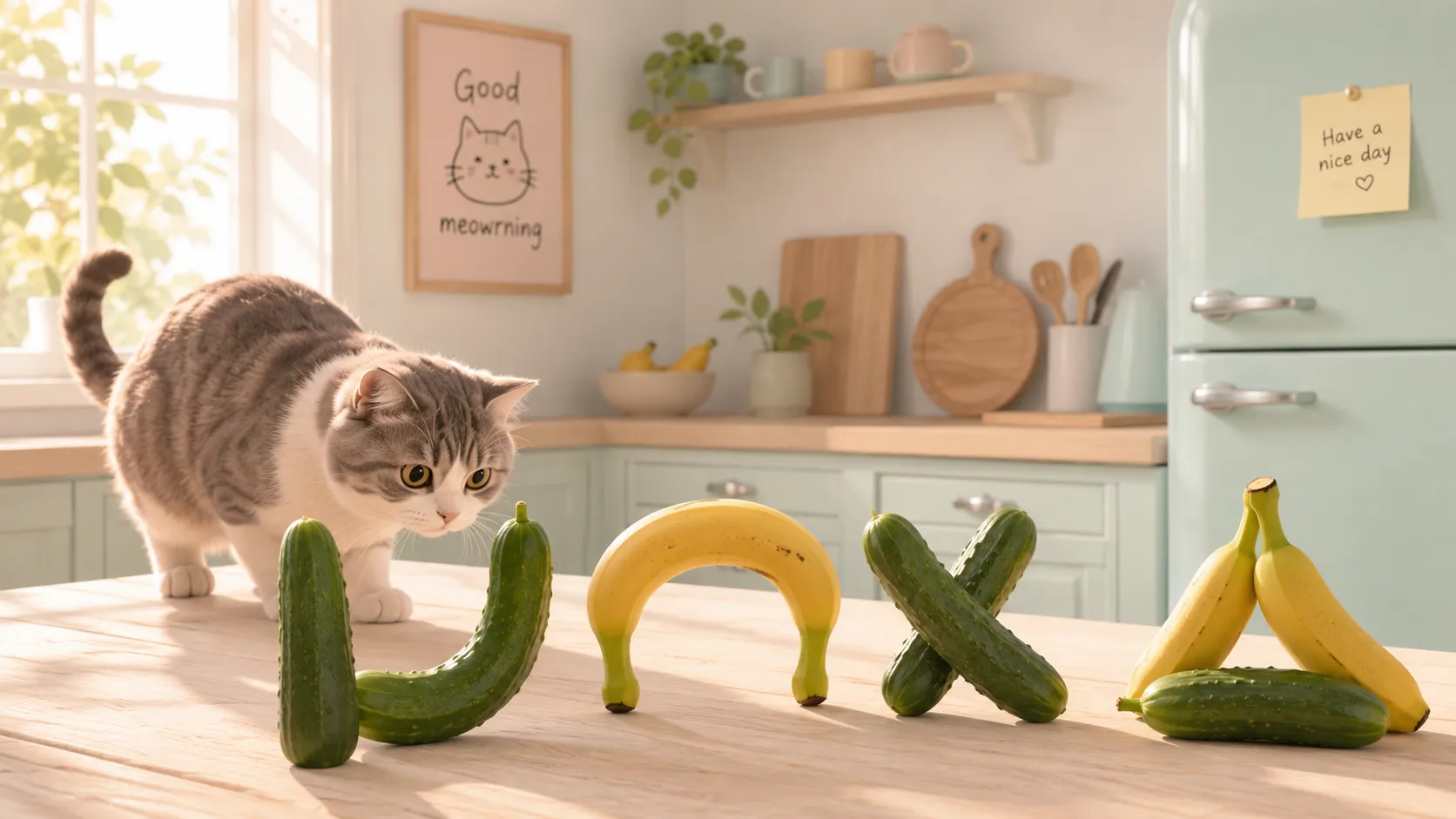
The internet has a strange talent for turning ordinary objects into global mysteries. One day it is cardboard boxes, the next day it is laser pointers, and suddenly everyone is watching videos of cats leaping into the air after spotting cucumbers or bananas behind them. These clips have collected millions of views across social media platforms, leaving pet owners wondering the same thing: why do cats react so dramatically to harmless fruits and vegetables?
At first glance, the reactions seem hilarious. A cucumber quietly placed behind a cat during mealtime results in a dramatic jump worthy of an action movie. Bananas sometimes trigger the same wide-eyed panic. But beneath the comedy lies something much deeper connected to feline instincts, survival behavior, environmental awareness, and trust. Experts increasingly warn that these reactions are not signs of amusement but evidence of genuine stress and fear. According to behavior specialists from the , cats are usually responding to the sudden appearance of an unfamiliar object rather than the cucumber itself.
Understanding this behavior requires stepping into the world from a cat’s perspective. Cats may live comfortably on couches and nap in sunny windows, but their brains are still wired with ancient survival instincts. Every sound, movement, and unfamiliar object gets analyzed for possible danger. When something unexpectedly appears behind them, especially while eating or relaxing, their nervous system reacts instantly. That explosive jump is less about vegetables and more about survival.
The Viral Internet Trend That Sparked Curiosity
How Cucumber Videos Became a Social Media Obsession
The cucumber trend exploded online because the reactions seemed so exaggerated and unexpected. Viewers watched cats calmly eating before suddenly launching backward in terror after spotting a cucumber placed behind them. The dramatic contrast between calmness and panic made the videos incredibly shareable. Social media thrives on surprise, and these clips delivered exactly that.
The problem is that the videos removed important context. Most people focused on the cat’s jump without considering why it happened. In many cases, the cucumber was secretly placed behind the cat while it was distracted by food. That detail matters enormously because cats are particularly vulnerable during eating. In nature, lowering their guard while eating could expose them to predators or threats. A sudden unfamiliar object appearing behind them activates an automatic defensive response almost instantly. Experts from and both explain that cats rely heavily on environmental predictability and become distressed when unexpected changes occur suddenly.
The popularity of these videos also encouraged imitation. Pet owners around the world began testing their own cats, hoping for dramatic reactions. Ironically, many cats did not react at all. Some sniffed the cucumber, rubbed against it, or ignored it completely. That inconsistency reveals something important: cats are not universally afraid of cucumbers. The fear response depends heavily on context, personality, timing, and surprise.
Why Bananas Started Triggering Similar Experiments
After cucumbers dominated the internet, bananas entered the conversation. Pet owners noticed that some cats backed away from bananas or stared at them cautiously. Once again, people jumped to the conclusion that cats possessed a mysterious fear of a common food item. The reality is less dramatic but far more interesting.
Bananas present several unusual sensory elements to cats. Their smell is strong and unfamiliar, especially when ripe. Their bright yellow color contrasts sharply against most indoor environments. Their curved shape and smooth surface may also look unusual to a cautious animal that depends on pattern recognition. Cats are creatures of habit. Anything visually or chemically unfamiliar can trigger suspicion, especially if it suddenly appears in a space they considered safe.
Some cat owners speculate that bananas produce a scent similar to chemicals used in cat repellents, though scientific evidence for this remains limited. What researchers and veterinarians consistently agree on is that novelty matters. Cats are naturally cautious around unfamiliar objects because caution historically increased survival chances. A strange object appearing suddenly is like hearing footsteps in a dark hallway; it may be harmless, but your brain prepares for danger anyway.
The Science Behind the Cat Startle Response
Cats as Both Predators and Prey
Cats occupy a fascinating position in nature because they are both hunters and hunted animals. This dual role shaped their nervous systems over thousands of years. While domestic cats may seem fearless when stalking toys or chasing insects, their brains remain highly sensitive to potential threats. Survival depended on reacting instantly to sudden environmental changes.
Unlike some animals that rely mainly on strength, cats rely on awareness and speed. Their senses constantly scan for movement, sound, and unfamiliar objects. Even a sleeping cat remains partially alert. This heightened vigilance explains why sudden surprises can provoke explosive reactions. According to feline behavior experts cited by , cats maintain strong survival instincts despite domestication.
Think about how humans react when someone suddenly appears behind them unexpectedly. Even knowing rationally that no danger exists, the body still jumps before the mind catches up. Cats experience something similar, except their instincts operate even faster because hesitation once carried life-or-death consequences in the wild.
This prey-animal wiring also explains why cats value predictable environments. Furniture changes, loud noises, unfamiliar guests, and sudden objects can all trigger anxiety. A cucumber placed silently behind a distracted cat violates its expectation of environmental stability. The brain immediately flags that inconsistency as potentially dangerous.
Why Sudden Objects Trigger Defensive Instincts
The key factor in most cucumber reactions is not the vegetable itself but the sudden appearance of something unexpected. Cats mentally map their surroundings constantly. When they turn around and discover an object that “was not there a second ago,” the brain interprets it as suspicious.
This defensive reaction happens incredibly fast. Before the cat consciously analyzes the object, the nervous system initiates a startle response. Muscles tense, pupils widen, adrenaline surges, and escape behavior activates instantly. That dramatic leap is not planned behavior; it is an automatic reflex.
Researchers and veterinarians repeatedly emphasize this point because many people misunderstand the videos. The object could just as easily be a toy, a shoe, or a rolled towel if introduced unexpectedly. Reddit discussions from cat owners echo the same observation, with many reporting that their cats ignored cucumbers when presented normally but reacted strongly when surprised.
The Importance of Environmental Awareness for Cats
Cats depend heavily on environmental control to feel secure. Unlike dogs, which often tolerate chaos more easily, cats prefer consistency. They establish safe zones, predictable pathways, and familiar routines. Even small environmental disruptions can increase stress levels.
When an unfamiliar object suddenly appears in a trusted location, the cat’s sense of security gets interrupted. Imagine walking into your bedroom and finding a strange figure standing silently in the corner. Even if harmless, your brain would immediately prepare for danger. Cats experience a similar moment of alarm when confronted with unexpected objects.
This is why many cucumber videos occur near food bowls. Eating is a vulnerable activity, and cats instinctively prefer stable surroundings while doing it. A surprise in that context feels especially threatening. Behaviorists warn that repeated scares can cause cats to associate feeding areas with anxiety, potentially affecting appetite and trust.
Are Cats Actually Afraid of Cucumbers?
The Surprise Factor Explained
The simplest explanation is usually the correct one: most cats are not specifically afraid of cucumbers. They are startled by unexpected changes in their environment. When the object appears suddenly behind them, the shock triggers an instinctive escape response.
This explains why reactions vary dramatically between cats. Some leap several feet into the air, while others merely glance backward. Personality plays a major role. Confident cats may investigate unfamiliar objects curiously, while anxious cats react defensively. Timing also matters. A cucumber introduced gradually in an open room often produces little reaction at all.
Veterinary experts from specifically caution against interpreting these videos as evidence of a universal cucumber phobia. The context of surprise matters more than the object itself.
The Snake-Shaped Object Theory
One popular theory suggests cucumbers resemble snakes, triggering an evolutionary fear response. The long green shape certainly resembles a snake at first glance, and humans naturally enjoy explanations connected to ancient instincts.
There may be some truth here, but experts remain divided. Some veterinarians believe the shape contributes to the reaction because snakes historically posed threats to small mammals. Others argue that domestic cats frequently hunt snakes and therefore do not possess a built-in snake phobia.
The reality likely sits somewhere in the middle. The snake-like shape may intensify suspicion in some cats, but it probably is not the primary cause. The surprise factor appears far more important. After all, many cats show no fear when seeing cucumbers placed openly in front of them.
Why Experts Disagree About the Snake Explanation
Animal behavior rarely follows simple rules. Cats are individuals shaped by genetics, personality, environment, and past experiences. One cat may react strongly to snake-like shapes, while another treats cucumbers as toys. That variability makes universal explanations difficult.
Behavior experts emphasize that interpreting animal emotions requires caution. Viral internet trends often oversimplify complex behaviors because dramatic narratives spread faster online. Saying “cats think cucumbers are snakes” sounds catchy, but it ignores the broader reality of feline psychology.
What scientists consistently agree on is that deliberately frightening pets for entertainment is unhealthy. Stress responses elevate heart rate, increase cortisol levels, and can damage trust between animals and owners.
Why Bananas Also Cause Strong Reactions
Unfamiliar Smells and Textures
Bananas create different sensory experiences than cucumbers. Their odor is strong, sweet, and chemically complex. Cats possess highly sensitive noses, meaning scents humans barely notice may feel overwhelming to them.
The texture and appearance also matter. Bananas are smooth, curved, brightly colored, and visually distinct from most household objects. Cats instinctively approach unusual items cautiously because unfamiliarity historically signaled risk.
Some owners report that cats avoid bananas but tolerate cucumbers, while others observe the opposite. That inconsistency reinforces the idea that individual personality and sensory sensitivity matter more than the specific fruit or vegetable involved.
Visual Contrast and Sudden Appearance
Cats rely heavily on visual consistency. A bright yellow banana placed suddenly in a familiar environment immediately stands out. Strong visual contrast can increase alertness because animals naturally notice objects that break environmental patterns.
The same principle explains why cats sometimes stare intensely at harmless household items. A shopping bag, vacuum cleaner, or folded blanket may look suspicious simply because it appeared unexpectedly or looks unfamiliar. The banana itself is not dangerous, but the brain treats unexpected novelty cautiously until proven safe.
Curiosity Versus Fear in Cat Behavior
Signs Your Cat Is Curious
Curious cats display relaxed but attentive body language. Their ears remain forward, tails stay neutral, and movements appear cautious rather than explosive. A curious cat may sniff the object, tap it gently, or circle around it while observing carefully.
Curiosity is actually a healthy sign. It shows the cat feels secure enough to investigate new experiences. Confident cats often respond this way when introduced properly to unfamiliar items.
Signs Your Cat Is Truly Frightened
Fear looks very different. A frightened cat may puff its fur, flatten its ears, widen its pupils, hiss, crouch low, or sprint away instantly. Some cats freeze completely, while others display defensive aggression.
These reactions indicate stress, not amusement. Viral videos often overlook the emotional cost behind the dramatic jump. What appears funny to humans may feel genuinely threatening to the cat experiencing it.
The Emotional Impact of Repeated Fright
Stress Responses in Domestic Cats
Cats experience stress physiologically as well as emotionally. Sudden fear increases adrenaline and cortisol levels, accelerating heart rate and preparing muscles for escape. Occasional startle responses are normal, but repeated stress can create long-term anxiety patterns.
According to veterinary experts, chronic stress in cats may contribute to behavioral problems, appetite changes, hiding behavior, aggression, and even physical health issues.
The danger with prank videos is repetition. Owners seeking dramatic reactions may repeatedly scare their pets, unintentionally reinforcing anxiety and insecurity.
How Trust Between Cats and Humans Can Be Damaged
Trust matters enormously in human-cat relationships. Cats rely on owners for food, safety, comfort, and stability. When the person they trust intentionally frightens them, confusion and insecurity can develop.
Cornell behavior specialists warn that cats may associate frightening experiences not only with objects but also with locations and people involved in the prank. That means repeated scares near food bowls or favorite resting areas can damage a cat’s sense of safety inside its own home.
Cats do not understand practical jokes. They simply learn whether environments and people feel predictable or threatening.
Viral Videos Versus Real Feline Behavior
Why Some Cats Ignore Cucumbers Completely
One of the strongest arguments against the “cats fear cucumbers” myth is the enormous number of cats that show zero reaction. Many owners report that their cats sniff cucumbers casually, rub against them, or ignore them entirely.
This variation demonstrates how personality shapes behavior. Confident, curious cats often tolerate novelty well, while cautious cats react defensively to surprises.
Personality Differences Among Cats
Cats possess remarkably diverse personalities. Some behave like fearless explorers, while others resemble anxious introverts who distrust every new object. Age, breed tendencies, early socialization, and past experiences all influence reactions.
A rescue cat with a history of stress may react more strongly than a relaxed kitten raised in a stable environment. Context matters too. A cat surprised while eating may react differently than the same cat encountering a cucumber calmly placed across the room.
Better Ways to Keep Cats Mentally Stimulated
Healthy Enrichment Activities for Indoor Cats
Cats thrive when mentally engaged. The good news is there are countless ways to stimulate feline curiosity without causing fear. Interactive play mimics hunting behavior and provides physical exercise alongside mental challenge.
Puzzle feeders, climbing shelves, window perches, treat hunts, and rotating toys all help enrich indoor environments. Cardboard boxes remain legendary for a reason; cats genuinely enjoy exploring enclosed spaces because they feel secure.
Environmental enrichment reduces boredom and anxiety while strengthening the bond between cats and owners.
| Healthy Enrichment Activity | Benefits for Cats |
|---|---|
| Puzzle feeders | Encourages problem-solving and slows eating |
| Wand toys | Mimics hunting instincts |
| Cat trees | Provides climbing and observation opportunities |
| Window perches | Offers visual stimulation |
| Hide-and-seek treats | Engages scent tracking instincts |
Toys, Climbing, and Interactive Play
Interactive play builds confidence and trust. Wand toys, feather teasers, and moving objects activate hunting instincts safely and positively. Cats enjoy the challenge of stalking, chasing, and pouncing because these activities satisfy deeply rooted behavioral needs.
Climbing spaces matter too. Cats naturally seek elevated vantage points where they can monitor surroundings safely. Cat trees and shelves allow them to observe the world while feeling secure.
Think of enrichment like exercise for the brain. A mentally stimulated cat tends to feel calmer, healthier, and more confident. Fear-based entertainment may create momentary laughs, but positive stimulation creates lasting well-being.
Conclusion
Cats are not secretly terrified of cucumbers and bananas like some bizarre feline conspiracy theory. Their dramatic reactions come from something far more understandable: instinctive survival responses triggered by sudden, unfamiliar changes in their environment.
The viral videos that made these reactions famous often ignore the emotional reality behind them. What looks funny online is usually a genuine stress response rooted in ancient defensive instincts. Cats rely heavily on environmental predictability, and unexpected objects appearing behind them can activate automatic fear reactions in an instant.
Some cats react strongly, others barely care, and many show simple curiosity instead of fear. That variation highlights an important truth about feline behavior: cats are individuals with unique personalities, sensitivities, and comfort levels.
Rather than testing their fear responses for entertainment, cat owners can build stronger relationships through enrichment, play, and trust. Interactive toys, climbing spaces, puzzle feeders, and gentle exploration satisfy curiosity without creating anxiety. In the end, the healthiest relationship with a cat is not built on startling them for laughs but on creating an environment where they feel safe enough to be curious.
FAQs
1. Are cats naturally afraid of cucumbers?
No, most cats are not inherently afraid of cucumbers. They usually react to the sudden appearance of an unfamiliar object rather than the cucumber itself.
2. Why do cats jump so high when startled?
Cats possess powerful muscles and rapid reflexes designed for survival. Their nervous systems react instantly to perceived danger, causing explosive escape movements.
3. Do bananas scare cats for the same reason as cucumbers?
Often yes. Bananas are unfamiliar, visually striking, and strongly scented, which can make cautious cats suspicious or startled.
4. Can scaring a cat damage trust?
Yes. Repeatedly frightening a cat can create stress and weaken the sense of safety and trust between the cat and owner.
5. What are safer ways to entertain indoor cats?
Interactive toys, puzzle feeders, climbing structures, window perches, and regular play sessions provide healthy mental and physical stimulation.

Kellan Voss is a 25-year-old American writer living in Spokane, Washington. He enjoys producing informative blog content covering pets, technology, and everyday problem-solving for pawlogic.online. His approachable writing style, commitment to factual accuracy, and passion for continuous learning help readers find practical answers they can trust.