
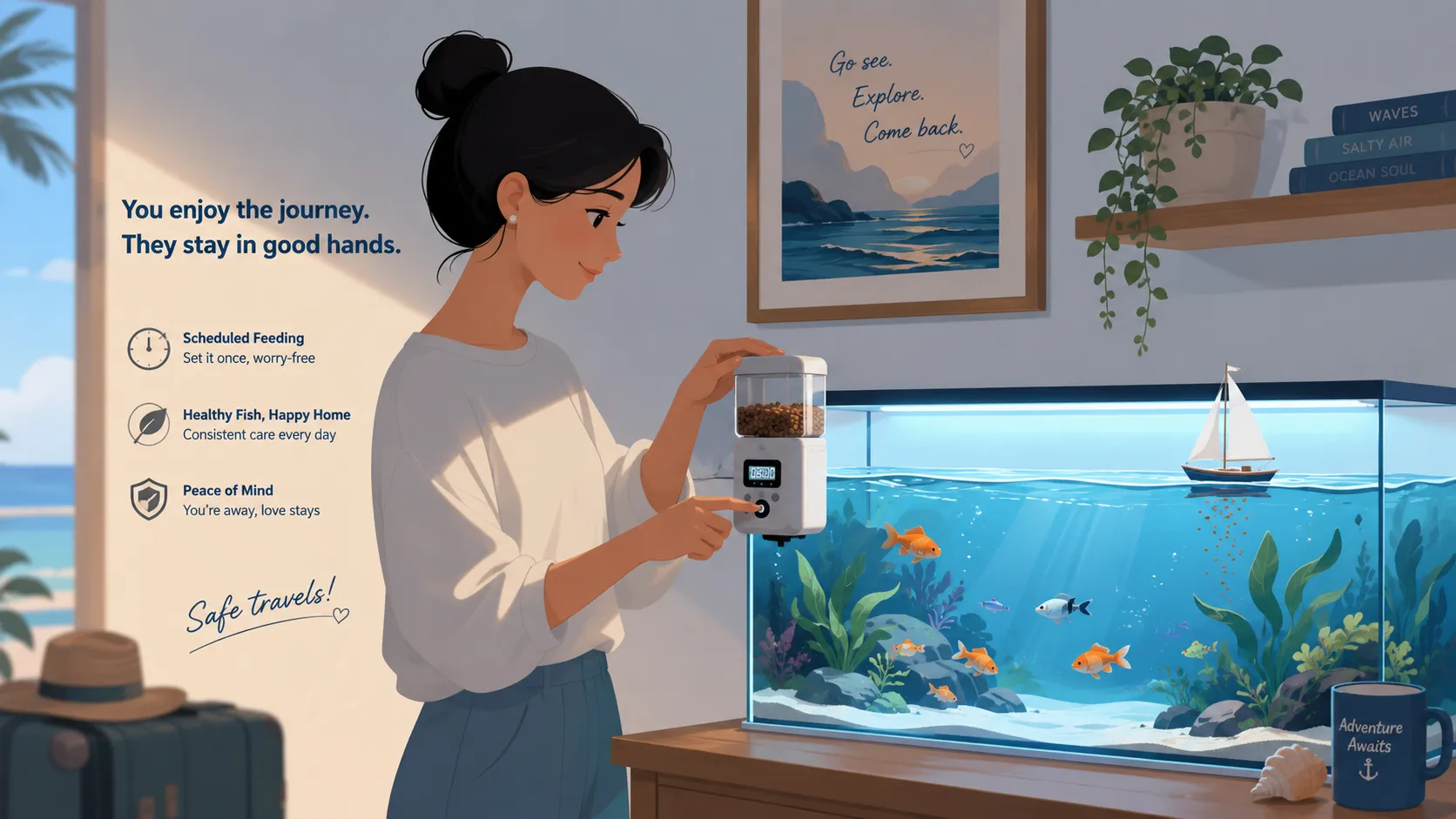
Taking a vacation should feel relaxing, but many aquarium owners spend half the trip wondering whether their fish are still healthy back home. Fish may seem low-maintenance compared to cats or dogs, yet aquariums are delicate ecosystems that can change quickly when feeding schedules are disrupted. A missed meal rarely harms healthy adult fish, but improper vacation feeding methods can create a chain reaction that damages water quality, stresses fish, and even wipes out an entire tank. That’s why planning ahead matters so much.
Many new aquarium owners assume fish need daily feeding without interruption, but the reality is more flexible. According to recent aquarium care guidance from , most healthy adult aquarium fish can safely go around three to five days without food, depending on species and tank conditions. Experienced hobbyists often point out that fish handle temporary fasting far better than excess food. Think of your aquarium like a small sealed world. Anything added to it stays there until filtration and beneficial bacteria can process it. Extra food doesn’t magically disappear. It rots, creates ammonia, encourages algae growth, and destabilizes the water chemistry.
The biggest mistake people make before traveling is panicking and dumping extra food into the tank “just in case.” Fish do not store food the way humans pack snacks for a road trip. Overfeeding before leaving usually creates more danger than missing a few meals. Uneaten flakes sink into the substrate, break down, and produce toxins. In many cases, returning from vacation to cloudy water and stressed fish is caused by too much feeding, not too little.
Vacation aquarium care becomes easier when you understand a simple truth: stability matters more than constant feeding. Healthy fish living in a mature, balanced aquarium are surprisingly resilient. Your goal isn’t to create a feast while you’re away. Your goal is to maintain a stable environment with minimal disruption. Once you approach vacation planning from that perspective, choosing the right feeding strategy becomes much simpler and safer.
How Long Most Aquarium Fish Can Safely Go Without Food
One of the most common questions aquarium owners ask is how long fish can survive without eating. The answer depends heavily on species, age, temperature, tank maturity, and overall health. Healthy adult freshwater fish usually tolerate short fasting periods surprisingly well. Several modern aquarium care sources report that many common aquarium species can survive between five and seven days without significant problems, while some larger species can last even longer under ideal conditions.
Tropical freshwater fish like tetras, guppies, mollies, danios, rasboras, and corydoras generally handle short vacations without issue. In planted aquariums, these fish may continue grazing on algae, microorganisms, or tiny food particles naturally present in the environment. Goldfish and certain coldwater fish often tolerate fasting even better because cooler temperatures slow their metabolism. Bettas are also known for surviving short periods without food, though that doesn’t mean it’s ideal to leave them unattended for weeks.
Here’s a general comparison table for common aquarium fish fasting tolerance:
| Fish Type | Typical Safe Fasting Range | Notes |
|---|---|---|
| Tetras & Rasboras | 5–7 days | Healthy adults tolerate short fasting well |
| Bettas | 5–10 days | Avoid overfeeding before leaving |
| Goldfish | 7–10 days | Cooler water slows metabolism |
| Cichlids | 5–7 days | Larger species tolerate fasting better |
| Fry & Juveniles | 1–3 days | Require frequent feeding |
| Marine Fish | 3–5 days | Saltwater species are more sensitive |
Young fish are a completely different story. Fry and juvenile fish have tiny energy reserves and need regular feeding to support growth. Sources discussing aquarium fasting consistently warn that baby fish should not be left without food for extended periods. If your tank contains fry, arranging a caretaker or using a carefully tested feeding system becomes essential.
Temperature also changes everything. Fish are cold-blooded animals, meaning warmer water speeds up metabolism. Tropical fish in heated aquariums burn energy faster than fish in cooler tanks. That’s why a heavily stocked tropical aquarium often requires more planning than a lightly stocked coldwater setup.
Still, survival should never be confused with thriving. Fish may survive a week without food, but pushing them too far increases stress and weakens their immune systems. The smartest approach is choosing a feeding plan based on your trip length rather than gambling on maximum survival times.
Choosing the Right Feeding Method for Your Trip Length
The ideal feeding method depends entirely on how long you’ll be away. A weekend trip requires a very different strategy than a two-week vacation. Many aquarium disasters happen because people overcomplicate short absences or underestimate long ones. Matching the solution to the trip length keeps your tank safer and reduces unnecessary stress.
For trips shorter than three days, the safest choice is usually doing absolutely nothing. Healthy adult fish rarely need feeding during a short weekend getaway. In fact, many experienced aquarists intentionally skip feeding once per week as part of normal maintenance. Fish continue exploring the tank, grazing naturally, and using stored energy reserves. Attempting to automate feeding for such a short period often introduces more risk than benefit.
For vacations lasting four to seven days, you have several options. Some aquarists still prefer fasting healthy adult fish during this timeframe, especially in mature planted tanks. Others use automatic feeders or ask a trusted person to stop by once midway through the trip. Recent community discussions among experienced aquarium hobbyists repeatedly emphasize that inexperienced helpers often cause more problems through overfeeding than through neglect. That’s why pre-measuring food portions is so important.
Trips longer than a week require more active planning. An automatic feeder becomes useful if properly tested beforehand. Alternatively, a reliable fish sitter can feed measured portions every few days while checking equipment. For tanks containing sensitive species, marine fish, fry, or high-maintenance feeders, human supervision is usually the better option.
Vacation feeding blocks, sometimes sold as “weekend feeders,” sound convenient but often create water quality issues. These blocks slowly dissolve into the water whether fish eat them or not. In many tanks, they raise ammonia levels, encourage algae blooms, and cloud the water. They’re often marketed as beginner-friendly solutions, yet experienced aquarists frequently avoid them because the risks outweigh the benefits.
A smarter strategy involves simplifying the tank before you leave. Reduce variables. Maintain normal feeding schedules in the days leading up to departure. Avoid introducing new fish, medications, or foods right before vacation. Stability is your greatest ally. Think of your aquarium like an airplane during turbulence: the fewer sudden changes you introduce, the safer the journey becomes.
Automatic Feeders vs Asking Someone to Help
Choosing between an automatic feeder and a human helper depends on your aquarium setup, trip duration, and how trustworthy your available helpers are. Both methods can work extremely well; or fail spectacularly; depending on preparation. The key is understanding the strengths and weaknesses of each option before relying on them.
Automatic feeders offer consistency and convenience. Most modern feeders dispense measured amounts of flakes or pellets at scheduled intervals. For lightly stocked freshwater aquariums, they can work beautifully during one- or two-week vacations. The biggest advantage is precision. Fish receive the same controlled amount every feeding, reducing the risk of accidental overfeeding. Automatic feeders also eliminate scheduling conflicts with neighbors or friends.
Still, automatic feeders are not foolproof. Humidity can cause food clumping, batteries can fail, and improperly adjusted portions may dump far too much food into the tank. Aquarium hobbyists regularly recommend testing feeders for several days before traveling. Run trial feedings while you’re home. Watch how much food enters the tank. Check whether flakes stick together or whether pellets fall properly into the water flow.
Human helpers introduce flexibility that machines cannot provide. A trusted friend can notice leaking filters, unusual fish behavior, dead fish, or equipment failures. This extra layer of observation becomes extremely valuable during longer vacations. Yet human helpers also introduce unpredictability. Many non-aquarium owners believe hungry-looking fish should receive more food. Fish naturally beg for food, even when they’re well-fed, and inexperienced caretakers often fall for it.
The safest solution when using a helper is pre-measuring every feeding. Place exact portions into labeled containers or pill organizers. Include simple written instructions like:
- Feed only one container per visit
- Do not add extra food
- Check that filter and heater are running
- Contact you if water looks cloudy or fish behave strangely
This system dramatically reduces mistakes. Think of it like meal prepping before a busy workweek. The less decision-making required, the fewer problems occur.
Interestingly, many experienced aquarists prefer slight underfeeding over any risk of overfeeding during vacations. Reddit aquarium discussions repeatedly show hobbyists reporting successful week-long absences with minimal feeding, while overfeeding stories often end with ammonia spikes and algae explosions. That pattern tells you something important: fish are tougher than aquarium water chemistry.
Preparing the Tank Before You Leave
A successful vacation aquarium plan starts days before you pack your suitcase. The condition of the tank before departure matters far more than most people realize. A stable, clean aquarium can tolerate small disruptions much better than a neglected one already struggling with poor water quality.
Start by performing a partial water change one or two days before leaving. This removes excess nitrates, leftover waste, and organic debris without shocking the system. Avoid huge last-minute changes unless absolutely necessary. Massive water changes can destabilize beneficial bacteria colonies and alter water chemistry unexpectedly. Gentle maintenance is safer than aggressive cleaning.
Filter maintenance is equally important. Clean filter sponges or mechanical media lightly using old tank water, not chlorinated tap water. The goal is restoring water flow without killing beneficial bacteria. A clogged filter during vacation can quietly reduce oxygen levels and allow toxins to accumulate.
Equipment checks should become part of your travel routine. Confirm heaters maintain stable temperatures. Ensure air pumps work properly. Use timers for aquarium lighting if possible. Excessive lighting during vacations commonly causes algae blooms, especially if feeding continues while nobody monitors the tank. Many hobbyists reduce lighting periods slightly before leaving to minimize algae growth.
Here’s a quick preparation checklist:
| Task | Recommended Timing |
|---|---|
| Partial water change | 1–2 days before leaving |
| Test heater and filter | 2–3 days before leaving |
| Test automatic feeder | Several days beforehand |
| Remove dead leaves/debris | Before departure |
| Pre-measure fish food | Night before trip |
| Check timers and outlets | Day of departure |
Avoid making dramatic changes right before leaving. Don’t rearrange decorations, switch foods, introduce medications, or add new fish. Aquariums thrive on consistency. Even beneficial changes can temporarily stress fish or disrupt biological balance.
Planted aquariums often handle vacations particularly well because plants naturally consume nitrates and stabilize water conditions. In mature planted tanks, fish may also graze on microfauna, algae, and biofilm while you’re gone. This natural buffering effect explains why heavily planted community tanks tend to survive short vacations more gracefully than sterile setups.
Another overlooked factor is evaporation. If your trip will last more than a week, ensure water levels won’t drop dangerously low. Lower water levels can affect filters, heaters, and oxygen exchange. Topping off the tank before departure helps maintain stable operation.
Vacation preparation is really about reducing risk. Think of it like preparing your home before a storm. You secure the weak points, confirm critical systems function properly, and avoid unnecessary complications.
Feeding Mistakes That Often Cause Water Problems
Most aquarium vacation disasters are not caused by starvation. They’re caused by water quality collapse triggered by poor feeding decisions. Fish are generally resilient, but aquarium ecosystems are delicate. A single feeding mistake can create a domino effect that spirals into cloudy water, algae blooms, ammonia spikes, stressed fish, and disease outbreaks.
The most common mistake is overfeeding before leaving. Many owners feel guilty about traveling and attempt to “stock up” their fish with huge meals beforehand. Fish do not work like camels storing energy for a long journey. Their digestive systems cannot safely process excessive food all at once. Uneaten food sinks into the substrate, where bacteria break it down and release ammonia.
Ammonia is toxic even at low levels. In healthy aquariums, beneficial bacteria convert ammonia into nitrites and then nitrates. But sudden excess waste can overwhelm this system. Water becomes cloudy, oxygen levels fall, and fish experience stress. Stress weakens immunity, making disease outbreaks more likely.
Vacation feeding blocks often worsen these issues. These dissolving blocks release food continuously whether fish eat it or not. In small tanks especially, they may drastically alter water chemistry. Experienced aquarists frequently report returning home to algae-covered tanks after using them.
Another hidden problem involves well-meaning friends. A helper sees fish eagerly swimming near the surface and assumes they’re starving. In reality, fish instinctively associate humans with feeding time. They “beg” constantly, even minutes after eating. Helpers often add extra pinches of food every visit, unknowingly polluting the tank.
Algae blooms are another common vacation issue. Excess nutrients from uneaten food combine with long lighting periods and reduced maintenance. Suddenly the tank turns green while algae coats glass and decorations. This may not immediately kill fish, but it destabilizes the environment and can reduce oxygen levels overnight.
The safest feeding philosophy during vacations is surprisingly simple: feed less, not more. Healthy fish tolerate mild fasting far better than polluted water. Aquarium veterans often repeat the same advice because experience keeps proving it true. Slight underfeeding rarely causes emergencies. Excess food causes them constantly.
Special Considerations for Community Tanks and Fry
Not all aquariums respond to vacations equally. Community tanks and tanks containing fry require additional planning because feeding behavior becomes more complicated when multiple species share the same environment. What works perfectly for a tank of adult tetras may fail completely in a mixed aquarium with aggressive eaters, bottom dwellers, shrimp, or baby fish.
Community tanks often develop feeding hierarchies. Fast-moving fish dominate food while shy species struggle to compete. During vacations, inconsistent feeding can intensify this imbalance. Aggressive fish may become territorial, especially if food becomes scarce. Bottom feeders like corydoras or loaches can miss meals entirely if floating foods are used improperly.
Species-specific needs also matter. Herbivorous fish may continue grazing naturally in planted aquariums, while strict carnivores struggle more during fasting. Some fish, like plecos, depend heavily on biofilm or algae and adapt well to temporary feeding interruptions. Others, especially sensitive tropical species, handle fasting poorly.
Fry require the most caution of all. Baby fish have extremely fast metabolisms and tiny fat reserves. Many need multiple daily feedings for healthy development. Leaving fry unattended for several days can stunt growth or lead to starvation. Aquarium discussions consistently emphasize arranging human feeding help whenever fry are present.
Automatic feeders also become less reliable in fry tanks because powdered or crushed foods may clump or dispense unevenly. Human supervision is usually the safest solution. If you must leave fry unattended briefly, heavily planted breeder tanks sometimes provide micro-organisms and infusoria that offer supplemental nutrition, but this should never replace planned feeding.
Shrimp tanks add another layer of complexity. Shrimp often survive vacations well because they continuously graze on biofilm, algae, and detritus. Yet excessive vacation feeding may actually harm shrimp more than temporary fasting by destabilizing water parameters.
The more diverse your aquarium becomes, the more important preparation becomes. Think of a community tank like a neighborhood with different personalities, diets, and behaviors all sharing limited resources. Your vacation plan needs to consider the needs of every resident, not just the easiest species to feed.
Checking Water Quality as Soon as You Return
Coming home from vacation feels exciting, but resist the urge to immediately dump food into the aquarium or start massive cleanups. Your first priority should be observation. Spend several minutes quietly watching the tank before touching anything. Fish behavior often reveals problems long before test kits do.
Check whether fish are gasping near the surface, hiding excessively, or showing unusual aggression. Look for cloudy water, excessive algae growth, dead plant matter, or equipment failures. Confirm the filter still runs properly and the heater maintains stable temperature.
Testing water parameters soon after returning is extremely helpful, especially after long trips. Ammonia and nitrite should remain at zero in established freshwater aquariums. Elevated nitrates may indicate excess waste buildup during your absence. If levels appear dangerous, perform gradual water changes rather than huge emergency replacements.
Many aquarists make the mistake of overcorrecting immediately after vacation. They perform giant water changes, deep-clean filters, vacuum aggressively, and feed heavily all at once. Sudden changes can shock already stressed fish. A slower recovery approach is usually safer.
Here’s a safer recovery process:
| Step | Purpose |
|---|---|
| Observe fish behavior | Identify obvious distress |
| Check equipment | Ensure heater/filter function |
| Test water parameters | Detect ammonia or nitrate spikes |
| Perform moderate water change | Restore stability gradually |
| Resume normal feeding slowly | Avoid digestive stress |
Fish returning from mild fasting often appear eager to eat, but resist overfeeding. Start with normal portions, not oversized “welcome home” meals. Digestive systems adapt to reduced feeding during vacations, and sudden heavy meals may cause bloating or water pollution.
Algae blooms deserve careful handling too. Avoid removing every trace at once if the tank became heavily overgrown. Sudden drastic cleaning can destabilize nutrient balance again. Gradual cleanup combined with restored maintenance routines works better long term.
One of the smartest habits aquarium owners develop is documenting what worked after each trip. Maybe your automatic feeder dispensed slightly too much food. Maybe lighting periods were too long. Maybe your helper followed instructions perfectly. Every vacation teaches something useful for the next one.
Simple Habits That Make Future Trips Easier
Experienced aquarium owners rarely panic before vacations because they build systems that support stability year-round. The healthiest aquariums are usually the ones least affected by temporary absences. Good daily habits create resilient ecosystems that tolerate minor disruptions naturally.
One powerful habit is avoiding overstocking. Crowded tanks generate waste faster and become unstable more quickly during missed maintenance. Lightly stocked aquariums with strong biological filtration handle vacations far more gracefully. Think of it like managing a small campsite versus an overcrowded festival. Fewer demands on resources create more breathing room when things aren’t perfectly maintained.
Planted tanks also simplify travel. Live plants consume nitrates, stabilize water chemistry, and create natural grazing opportunities for fish and shrimp. Mature planted aquariums often develop tiny ecosystems full of microorganisms that fish snack on while owners are away.
Automation helps too. Reliable light timers, battery backups, automatic top-off systems, and tested feeders reduce dependence on human intervention. Still, every automated system should be tested extensively before relying on it during a long trip.
Creating a written vacation checklist saves enormous stress. Include tasks like:
- Water change schedule
- Equipment checks
- Feeding instructions
- Emergency contact numbers
- Power outage plans
Many hobbyists also build relationships with local aquarium communities or trusted fish stores. Having someone knowledgeable available for emergencies provides peace of mind during extended travel.
Perhaps the most important mindset shift is understanding that fish usually benefit from moderation. Stable water, consistent temperatures, and minimal stress matter far more than abundant food. Aquarium care often rewards restraint rather than constant intervention.
A healthy aquarium is like a balanced garden. Once the ecosystem matures, it becomes surprisingly self-supporting. Your role is less about controlling every detail and more about maintaining conditions that allow stability to continue naturally; even when you’re temporarily away.
Conclusion
Feeding fish while on vacation becomes much less stressful once you understand how resilient healthy aquarium ecosystems can be. Most adult freshwater fish tolerate short fasting periods surprisingly well, while overfeeding remains the far greater danger in most situations. Choosing the right vacation strategy depends on trip length, fish species, tank maturity, and whether fry or sensitive species are involved.
Short trips often require no feeding at all. Longer vacations may benefit from carefully tested automatic feeders or trusted helpers using pre-measured food portions. Preparing the tank properly before departure; through water changes, equipment checks, and stable routines; dramatically improves your chances of returning to a healthy aquarium.
The most successful vacation aquarium plans focus on stability instead of excess. Stable water chemistry, reliable filtration, and controlled feeding protect fish far better than panic-driven overfeeding or last-minute changes. Once you adopt that mindset, vacations stop feeling like risky experiments and start becoming manageable parts of responsible aquarium keeping.
FAQs
1. Can aquarium fish survive a week without food?
Yes, many healthy adult freshwater fish can survive five to seven days without food under stable tank conditions. Species, age, and temperature all affect fasting tolerance.
2. Are automatic fish feeders reliable for vacations?
Automatic feeders can work very well if tested beforehand. Problems usually occur when feeders are not calibrated properly or food clumps due to humidity.
3. Should I feed fish extra before leaving on vacation?
No. Overfeeding before leaving often causes ammonia spikes and poor water quality. Stick to normal feeding amounts.
4. Are vacation feeding blocks safe?
Vacation feeding blocks can cause water chemistry issues in many aquariums because they dissolve continuously. Many experienced aquarists avoid them.
5. What should I do first when I return home?
Check fish behavior, confirm equipment works properly, test water quality if possible, and perform a moderate water change if needed before resuming normal routines.

Kellan Voss is a 25-year-old American writer living in Spokane, Washington. He enjoys producing informative blog content covering pets, technology, and everyday problem-solving for pawlogic.online. His approachable writing style, commitment to factual accuracy, and passion for continuous learning help readers find practical answers they can trust.