
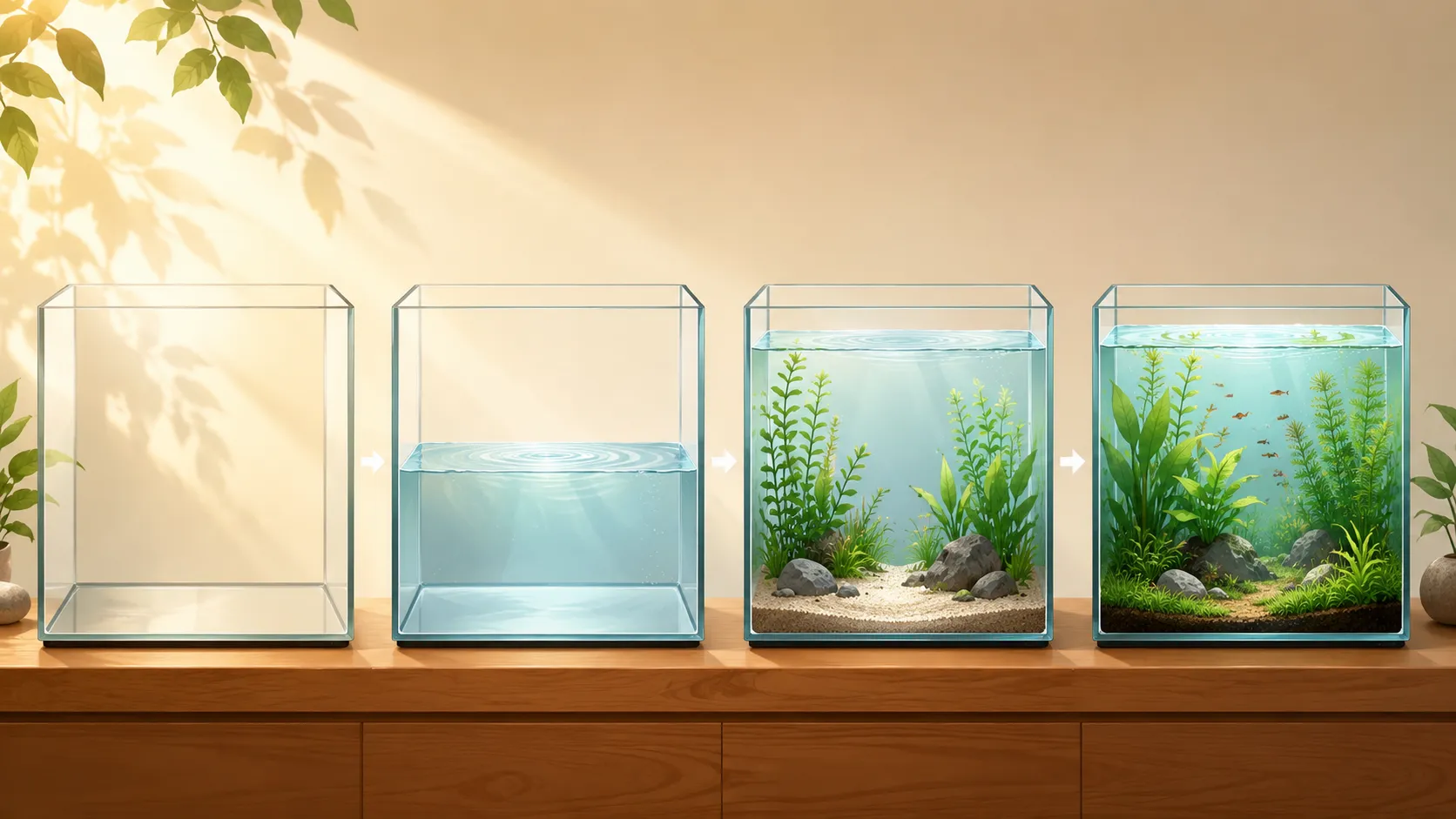
Setting up a brand-new aquarium feels exciting. You install the filter, arrange the decorations, fill the tank with water, and suddenly you start imagining colorful fish swimming around like a tiny underwater city. The temptation to add fish immediately is incredibly strong. Yet this is exactly where many beginners accidentally create disaster. A new aquarium may look clean and ready, but biologically it is still empty. Without beneficial bacteria, toxic waste quickly builds up and turns the tank into a dangerous environment for fish.
That is why fishless cycling has become one of the most recommended aquarium practices in modern fishkeeping. Instead of exposing live fish to toxic ammonia and nitrite, aquarists now grow healthy bacterial colonies before adding livestock. This approach creates a safer ecosystem while dramatically improving long-term tank stability. According to recent aquarium cycling guides published in 2025 and 2026, most freshwater tanks require anywhere from 3 to 8 weeks to establish a stable nitrogen cycle depending on temperature, ammonia dosing, filtration, and bacterial seeding methods.
Think of the aquarium cycle like building a biological workforce. Before fish arrive, invisible cleanup crews must move into the tank and prepare for constant waste management. If that workforce is weak or incomplete, toxic compounds pile up quickly. Fishless cycling gives those microscopic workers time to establish themselves properly. Once you understand how the process works, aquarium care suddenly becomes much less mysterious and far less stressful.
Why Fishless Cycling Has Become the Preferred Aquarium Method
Years ago, many hobbyists used hardy fish to cycle aquariums. The fish produced waste, ammonia levels rose, and eventually bacteria developed naturally. The problem? Fish often suffered through toxic water conditions during the process. Ammonia burns gills, weakens immune systems, and causes severe stress. Nitrite is equally dangerous because it interferes with oxygen transport inside the fish’s bloodstream. In many cases, beginner tanks experienced fish deaths simply because the biological filter was not mature enough.
Fishless cycling completely changes that approach. Instead of risking animal health, aquarists simulate fish waste using controlled ammonia sources. This allows beneficial bacteria to develop safely before fish are introduced. The process may require patience, but it creates a healthier environment from day one. Modern aquarium communities strongly encourage fishless cycling because it reduces stress, lowers mortality rates, and improves overall water stability.
The nitrogen cycle itself is actually a beautiful example of biological balance. Waste enters the system, bacteria convert harmful compounds into safer ones, and the aquarium slowly transforms into a miniature ecosystem. It works almost like composting in a garden. At first, organic material rots and creates unstable conditions. Over time, helpful organisms appear and stabilize everything naturally. Your filter becomes more than a machine pushing water around; it becomes the biological heart of the tank.
Another reason fishless cycling is preferred today is the availability of modern tools. Aquarists now have access to liquid test kits, bottled bacteria, seeded filter media, and accurate ammonia dosing products. These tools make the process far easier than it was decades ago. Instead of guessing whether a tank is ready, hobbyists can now track each stage scientifically through water testing and observe the cycle progressing in real time.
Understanding Beneficial Bacteria in the Aquarium
The real stars of aquarium cycling are not the fish, plants, or decorations. They are the microscopic colonies of beneficial bacteria that quietly handle toxic waste every second of the day. Without them, an aquarium simply cannot function long term. These bacteria form the backbone of the biological filtration system and are responsible for keeping water safe for aquatic life.
The first group of bacteria consumes ammonia, which is produced from fish waste, decaying food, dead plant matter, and other organic debris. Ammonia is highly toxic even at low concentrations. Specialized bacteria commonly associated with the genus Nitrosomonas convert ammonia into nitrite. While this is progress, nitrite is still harmful to fish and must be processed further.
A second bacterial group then converts nitrite into nitrate. Nitrate is far less toxic and can be controlled through water changes or absorbed by live plants. This two-step bacterial process forms the foundation of the aquarium nitrogen cycle. It may sound simple on paper, but establishing stable colonies takes time because bacteria reproduce gradually rather than instantly.
Beneficial bacteria do not float freely in large numbers through the water. Instead, they colonize surfaces. This is why filter media is so important. Sponge filters, ceramic rings, bio-balls, gravel, decorations, and even plant leaves become homes for bacterial communities. The greater the available surface area, the larger the bacterial population your aquarium can support. That is also why replacing filter media too aggressively can crash a cycle unexpectedly.
Temperature and oxygen levels also affect bacterial growth dramatically. Studies and aquarium guides published recently suggest nitrifying bacteria perform best around 78–82°F (25–28°C) with strong oxygenation. Cooler temperatures slow bacterial reproduction and may extend cycling time significantly.
What You Need Before Starting a Fishless Cycle
Before beginning the cycling process, preparation matters more than many beginners realize. Imagine trying to bake bread without preheating the oven or gathering ingredients first. Aquarium cycling works similarly. The more stable the setup is at the start, the smoother the process becomes later. A poorly prepared aquarium often leads to stalled cycles, inaccurate test results, and unnecessary frustration.
The most important component is a reliable filter. Since beneficial bacteria colonize surfaces, the filter acts as the primary biological engine of the aquarium. Sponge filters and hang-on-back filters both work well for beginners because they provide excellent surface area for bacterial growth. Larger aquariums may benefit from canister filters with multiple biological media chambers. Whatever system you choose, consistency matters more than expensive equipment.
A heater is also highly recommended, even for tropical freshwater setups that do not yet contain fish. Warm water speeds up bacterial metabolism and reproduction. Many successful fishless cycles are maintained around 80°F specifically to encourage faster bacterial colonization. Strong aeration is equally important because nitrifying bacteria consume oxygen constantly while processing waste. Tanks with poor circulation often cycle slower due to oxygen limitations.
Water testing kits are another essential tool. Test strips may seem convenient, but liquid test kits are generally more accurate and easier to interpret during cycling. You will need to monitor:
| Water Parameter | Why It Matters |
|---|---|
| Ammonia | Indicates initial waste levels |
| Nitrite | Shows bacteria converting ammonia |
| Nitrate | Confirms second bacterial colony growth |
| pH | Affects bacterial efficiency |
Water testing transforms cycling from guesswork into observation. Instead of wondering whether the process is working, you can literally watch the ecosystem evolve chemically over time. That is one reason many aquarists find cycling surprisingly fascinating once they understand the science behind it.
Choosing an Ammonia Source for Fishless Cycling
Every fishless cycle requires one critical ingredient: an ammonia source. Without ammonia, beneficial bacteria have nothing to consume and therefore cannot grow. The challenge is choosing the right source because different methods affect cycling speed, cleanliness, and precision.
Pure liquid ammonia is often considered the most efficient option. It allows precise dosing and creates predictable ammonia levels inside the aquarium. Many hobbyists aim for approximately 2–4 ppm ammonia during cycling because it provides enough food for bacterial growth without overwhelming the system. Research and aquarium guides warn against exceeding about 5 ppm since excessively high ammonia can actually slow bacterial development rather than accelerate it.
Another method involves using fish food or organic matter like shrimp. As the material decays, ammonia is released naturally into the water. This method works, but it is less precise and often creates cloudy water or unpleasant odors. It is somewhat like composting kitchen scraps instead of using measured fertilizer. Effective, but messier and harder to control.
Bottled bacteria products have also become extremely popular. Some products contain live nitrifying bacteria designed to jumpstart cycling dramatically. Results vary depending on storage conditions and product quality, but many aquarists report shorter cycling times when using reputable bacterial supplements. Seeded filter media from an established aquarium remains one of the fastest methods because it transfers mature bacterial colonies directly into the new tank.
Choosing the right ammonia source often depends on your patience level and experience. Beginners usually prefer pure ammonia because the measurements are easier to manage. More advanced hobbyists may combine methods by using bottled bacteria alongside controlled ammonia dosing to accelerate the process even further.
Step-by-Step Process for Cycling a Tank Without Fish
Fishless cycling may sound technical at first, but the process becomes straightforward once broken into steps. The key is consistency. Beneficial bacteria thrive in stable environments, so sudden changes usually create setbacks rather than improvements.
Start by fully setting up the aquarium. Install the filter, heater, substrate, decorations, and dechlorinated water. Chlorine and chloramine found in untreated tap water can kill beneficial bacteria instantly, so water conditioner is mandatory before beginning the cycle. Once the system is running, allow the temperature to stabilize around 78–82°F.
Next, add your ammonia source. If using pure ammonia, dose carefully until the tank reaches around 2–4 ppm. Then begin daily testing. During the first stage, ammonia levels remain high while nitrite stays near zero. This period can feel frustrating because nothing appears to happen visually. Under the surface, however, bacterial colonies are slowly forming.
After roughly one to two weeks, ammonia usually begins dropping while nitrite rises sharply. This is known as the nitrite spike, and it often becomes the longest phase of the cycle. Many aquarists panic here because nitrite levels may appear stuck for days or even weeks. Recent aquarium discussions and cycling reports consistently show that nitrite-processing bacteria typically grow slower than ammonia-processing bacteria.
Eventually, nitrate appears. This is the moment many beginners finally realize the cycle is working properly. Nitrate indicates the second bacterial colony has become active and is converting nitrite successfully. The aquarium is considered cycled once it can process a fresh ammonia dose into zero ammonia and zero nitrite within approximately 24 hours while producing measurable nitrate.
Patience matters enormously here. Aquarium cycling is biological agriculture on a microscopic level. You are essentially farming bacteria. Just as crops cannot be rushed by staring at them, bacterial colonies require time to mature naturally.
What Water Tests Reveal During Each Stage
Water testing is like reading the aquarium’s diary. Each parameter tells part of the story, revealing how the invisible bacterial ecosystem develops over time. Once you understand the patterns, interpreting test results becomes much less intimidating.
The first stage usually shows rising ammonia with zero nitrite and nitrate. This indicates the tank has waste available but insufficient bacteria to process it. Some beginners worry the cycle is not working during this phase, especially if readings remain unchanged for several days. In reality, bacteria are simply establishing themselves slowly.
The second stage introduces nitrite. Ammonia begins falling while nitrite climbs dramatically. Many tanks experience extremely high nitrite readings during this phase, sometimes off the chart entirely. According to recent aquarium cycling discussions, nitrite spikes commonly last longer than ammonia spikes because nitrite-oxidizing bacteria reproduce more slowly.
The final stage reveals nitrate accumulation. This signals that the nitrogen cycle is nearing completion. Nitrate itself is far less toxic than ammonia or nitrite, though excessive levels still require management through water changes and plants. Many aquarists perform a large water change before adding fish to reduce nitrate concentrations after cycling completes.
Here is a simplified view of the process:
| Cycling Stage | Ammonia | Nitrite | Nitrate |
|---|---|---|---|
| Beginning | High | 0 | 0 |
| Mid-Cycle | Falling | Rising | Low |
| Near Completion | 0 | Falling | Rising |
| Fully Cycled | 0 | 0 | Present |
One interesting complication is that nitrate test readings may appear inaccurate while nitrite remains extremely high. Several hobbyists recently discussed this issue online, explaining that nitrite can interfere with some nitrate test kits and produce misleading readings. That is why understanding trends over time matters more than obsessing over single test results.
How Long Fishless Cycling Usually Takes
One of the most common questions beginners ask is simple: “How long will this take?” The answer varies because aquarium cycling depends on biology, temperature, oxygen, ammonia concentration, and bacterial seeding methods. Still, most modern aquarium guides place the average fishless cycle between 3 and 8 weeks.
Tanks started with seeded media from mature aquariums may complete the process in under two weeks. Bottled bacteria products can also shorten cycling considerably if used correctly. Completely sterile setups without bacterial additives usually take longer because colonies must develop naturally from scratch.
Several factors influence cycling speed:
| Factor | Effect on Cycling |
|---|---|
| Warm temperatures | Speeds bacterial growth |
| Strong aeration | Improves oxygen supply |
| Seeded media | Introduces mature bacteria |
| Excess ammonia | May stall bacteria |
| Low pH | Slows nitrification |
Interestingly, many aquarists report the nitrite stage as the slowest and most emotionally frustrating part of the process. Reddit discussions from 2025 and 2026 show hobbyists waiting several weeks for nitrite to finally disappear even after ammonia processing became efficient.
This is where patience separates successful aquarists from impulsive ones. Adding fish too early is like moving into a house before the plumbing works. Everything may appear ready on the surface, but hidden systems are still unfinished. Waiting an extra week is almost always safer than rushing the process.
Common Mistakes That Slow Down Tank Cycling
One of the biggest mistakes beginners make is overdosing ammonia. Many assume higher ammonia means faster bacterial growth, but biology does not always work that way. Excessive ammonia concentrations can actually inhibit bacterial colonies and prolong the cycle significantly. Most experts recommend maintaining moderate ammonia levels instead of repeatedly pushing the tank above 5 ppm.
Another major problem is improper filter cleaning. Beneficial bacteria live primarily inside filter media, not floating freely in the water. Washing filter sponges under untreated tap water can wipe out bacterial colonies almost instantly because chlorine kills microbes efficiently. Aquarium filters should instead be rinsed gently in old tank water during maintenance.
Temperature neglect also slows bacterial reproduction dramatically. Some aquarists leave cycling tanks at room temperature without heaters, especially during winter. Cooler water reduces bacterial metabolism and extends the timeline considerably. Recent aquarium resources repeatedly emphasize maintaining temperatures near 78–82°F during fishless cycling for optimal bacterial growth.
Poor oxygenation creates another hidden issue. Nitrifying bacteria are aerobic organisms, meaning they require oxygen constantly. Weak circulation or insufficient aeration can limit bacterial efficiency. Some hobbyists even report improved cycling speed after adding air stones or increasing water movement.
Finally, many beginners sabotage themselves simply by panicking. They perform massive unnecessary water changes, replace filter media prematurely, or constantly alter dosing schedules because they believe the cycle has stalled. Biological systems rarely operate on human impatience. Stability usually produces better results than constant intervention.
Signs Your Aquarium Is Finally Ready for Fish
After weeks of testing and waiting, every aquarist eventually reaches the most exciting milestone: a fully cycled aquarium. The challenge is recognizing the signs correctly because adding fish too early can undo weeks of progress.
The clearest indicator is this: the tank can process a full ammonia dose into 0 ppm ammonia and 0 ppm nitrite within 24 hours while producing measurable nitrate. This demonstrates that both major bacterial colonies are established and functioning efficiently.
You may also notice the aquarium itself appears more stable visually. Water clarity often improves as bacterial populations mature. Some tanks develop subtle biofilm layers on decorations or filter surfaces, which is perfectly normal in new ecosystems. Plants may begin growing more consistently as nutrient balance stabilizes.
Before adding fish, most aquarists perform a substantial water change to reduce accumulated nitrate. Since nitrate rises steadily during cycling, levels may become relatively high by the end of the process. Lowering nitrate before introducing livestock gives fish a cleaner and safer starting environment.
It is also wise to stock the aquarium gradually rather than adding a massive fish population immediately. Even mature bacterial colonies need time to adapt to increasing waste loads. Think of it like training employees at a new factory. Sudden overload creates stress, while gradual increases allow systems to adjust smoothly.
Keeping the Nitrogen Cycle Stable After Setup
Cycling does not end once fish enter the aquarium. In many ways, that is simply the beginning of long-term biological maintenance. A healthy nitrogen cycle must remain stable continuously because fish produce waste every day.
Regular water changes become one of the most important habits after setup. While bacteria convert ammonia and nitrite effectively, nitrate still accumulates gradually. Weekly partial water changes help dilute nitrate while replenishing minerals and improving water quality overall.
Avoid replacing all filter media simultaneously. Since beneficial bacteria live heavily inside the filter, replacing everything at once can destabilize the biological filter dramatically. Instead, clean or replace media gradually over time. Gentle maintenance preserves bacterial colonies while keeping filtration efficient.
Feeding practices also matter enormously. Overfeeding creates excess waste, leading to ammonia spikes and unstable water conditions. Many beginners accidentally damage water quality by feeding far more food than fish can consume. Uneaten food decomposes quickly and overloads the biological system unnecessarily.
Live plants can help stabilize the cycle naturally by absorbing nitrate as fertilizer. Planted aquariums often experience improved nutrient balance and reduced algae problems because plants compete for excess nutrients. Some aquarists even describe live plants as an additional layer of biological filtration working alongside bacteria.
Most importantly, consistency keeps aquariums healthy long term. Sudden changes in temperature, water chemistry, stocking levels, or maintenance routines often stress biological systems. Stable tanks usually come from stable habits rather than expensive equipment or constant adjustments.
Conclusion
Fishless cycling transforms aquarium setup from guesswork into biological preparation. Instead of exposing fish to toxic ammonia and nitrite, this method allows beneficial bacteria to establish safely before livestock enters the tank. The process may take several weeks, but the reward is a far healthier and more stable aquarium ecosystem.
Understanding the nitrogen cycle changes the way aquarists view their tanks. Filters become bacterial habitats, water tests become ecosystem reports, and patience becomes one of the most valuable skills in fishkeeping. Every stable aquarium depends on microscopic organisms working quietly behind the scenes every hour of every day.
The beauty of fishless cycling lies in its simplicity. Provide ammonia, maintain stable conditions, monitor water parameters, and allow nature to build balance gradually. Once the cycle matures, your aquarium evolves from a glass box filled with water into a living biological environment capable of supporting healthy aquatic life for years to come.
FAQs
1. Can I cycle a fish tank faster with bottled bacteria?
Yes, bottled bacteria products can significantly reduce cycling time when they contain live nitrifying bacteria and are stored properly. Many aquarists report faster results when combining bottled bacteria with controlled ammonia dosing and warm temperatures.
2. What ammonia level should I maintain during fishless cycling?
Most hobbyists aim for around 2–4 ppm ammonia. Levels above 5 ppm may actually slow bacterial growth and stall the cycling process.
3. Why is my nitrite stuck for weeks?
Nitrite-processing bacteria often grow slower than ammonia-processing bacteria. This phase commonly takes the longest during cycling, especially in cooler water or tanks with poor oxygenation.
4. Do live plants help during cycling?
Yes, live plants can absorb nitrate and sometimes ammonia directly, helping stabilize water chemistry naturally while supporting long-term ecosystem balance.
5. Can a fish tank lose its cycle after completion?
Yes, bacterial colonies can weaken or die if deprived of ammonia for long periods, exposed to chlorine, or damaged through aggressive filter cleaning. Consistent maintenance helps preserve the biological filter.

Corbin Hale is a 29-year-old American content writer based in Boise, Idaho. He has spent several years creating well-researched articles about pets, home living, and practical lifestyle topics while contributing to websites such as pawlogic.online. His writing focuses on accuracy, reader-friendly explanations, and trustworthy information supported by careful research and real-world experience.