

Cats can turn a peaceful home into a battlefield almost overnight. One moment they are quietly sharing a windowsill, and the next there is hissing, growling, chasing, and fur flying across the living room. Many cat owners panic when this happens because it feels personal, emotional, and unpredictable. The truth is that cat aggression usually follows patterns, and once you understand those patterns, the behavior becomes far easier to manage.
Recent feline behavior research shows that tension in multi-cat homes is more common than most people think. A large survey of multi-cat households found that over 73% of owners noticed conflict signs during introductions between cats, while behaviors like staring, chasing, and hissing occurred regularly in many homes. Multi-cat households are also increasingly common, with recent reports showing that 34% of cat-owning households now have two or more cats.
The good news is that most cat conflicts are manageable. Cats are not “evil,” “spiteful,” or secretly plotting domination like tiny furry villains in a crime movie. Their behavior is usually connected to territory, fear, stress, resource competition, or poorly handled introductions. Understanding the difference between rough play and true aggression is the first step toward restoring peace inside your home.
Understanding Why Cats Fight
People often assume cats are naturally solitary animals that simply “don’t like each other,” but reality is more complicated than that. Cats can absolutely form close social bonds, sleep together, groom one another, and even experience separation stress when apart. At the same time, they are highly territorial creatures. Imagine living with roommates who constantly sit in your favorite chair, eat your food, block your bathroom access, and stare at you while you sleep. Even the calmest person would eventually snap. That is essentially what happens in many multi-cat homes.
Territory matters enormously to cats because it represents safety, control, and survival. Unlike dogs, who are generally more socially flexible, cats prefer environments where they can predict what will happen around them. Sudden changes; a new cat, loud guests, moving furniture, or even outdoor cats appearing near windows; can increase anxiety dramatically. Studies on feline household conflict repeatedly point toward environmental stress and social instability as major contributors to aggression.
Multi-cat homes naturally increase the chances of tension because each cat has its own personality, comfort zone, and tolerance level. Some cats are confident extroverts that enjoy interaction. Others prefer distance and independence. Problems begin when owners assume all cats should automatically become friends. Cats do not operate like a Disney movie where everyone cuddles after two minutes. Relationships between cats are gradual, delicate, and heavily shaped by environment.
The size of the home also plays a role. In smaller homes, cats cannot easily avoid each other. A nervous cat may feel trapped if an aggressive cat controls hallways, litter boxes, or feeding areas. Many owners miss these subtle power struggles because they only notice the dramatic fights. Yet tension often builds slowly through staring, blocking, stalking, or silent intimidation long before claws come out. Research surveys have shown that staring and chasing are among the most common conflict behaviors observed in multi-cat households.
Understanding this foundation changes everything. Cat fights are rarely random explosions. They are usually the final chapter of ongoing stress.
Understanding the Difference Between Play and Real Aggression
One of the biggest mistakes cat owners make is confusing rough play with genuine aggression. Cats naturally wrestle, stalk, chase, and pounce during play. To human eyes, it can look dramatic. A playful interaction can include biting, bunny-kicking, and sudden ambushes. The difference lies in the emotional tone and body language.
Healthy play tends to look balanced. The cats take turns chasing each other, neither cat appears cornered, and the interaction pauses naturally without escalating. Their ears stay mostly upright, claws remain partially retracted, and there is little or no vocalization. You might even notice them returning to normal activities immediately afterward, like grooming or napping together. Think of it like two children playing soccer in the backyard. It can get loud and chaotic, but there is still mutual participation.
Real aggression feels completely different. The atmosphere becomes tense and emotionally charged. One cat often attempts to flee while the other pursues relentlessly. Growling, screaming, hissing, flattened ears, puffed tails, dilated pupils, and arched backs are strong warning signs. When cats enter true fight mode, they are no longer “playing rough.” They are operating from fear, defense, or territorial hostility.
Researchers studying feline aggression emphasize the importance of recognizing subtle conflict signals early because many owners mistakenly dismiss them as normal cat behavior. The longer true aggression continues, the harder it becomes to repair the relationship between cats.
Here is a simple comparison table that helps distinguish play from aggression:
| Behavior | Playful Interaction | Real Aggression |
|---|---|---|
| Vocalization | Quiet or minimal | Hissing, growling, screaming |
| Body posture | Relaxed and loose | Rigid and tense |
| Chasing | Takes turns | One-sided pursuit |
| Claws | Usually retracted | Extended claws |
| Recovery after interaction | Quick return to calm | Continued fear or avoidance |
| Facial expression | Neutral curiosity | Dilated pupils and flattened ears |
Learning to recognize these differences can prevent owners from accidentally encouraging harmful interactions. Many people laugh at rough behavior that is actually escalating hostility. Others panic during harmless play and interrupt normal bonding. Observation is critical.
What Usually Triggers Conflict Between Cats
Cats rarely wake up one morning and suddenly decide to hate each other. There is almost always a trigger underneath the behavior. Sometimes the trigger is obvious, like bringing a new kitten into the house. Other times it is surprisingly subtle.
One of the most common causes is competition over resources. Cats may fight over food bowls, litter boxes, beds, scratching posts, resting spots, or access to windows. Even when there appears to be “enough” of everything, placement matters. If one confident cat can guard a hallway leading to the litter box, another cat may feel chronically unsafe. This low-level stress slowly poisons the relationship.
Outdoor cats are another major trigger. Many owners do not realize that indoor cats can become highly reactive to unfamiliar cats seen outside windows or doors. This often leads to redirected aggression. Imagine your cat spots a strange animal outside but cannot reach it. The emotional energy has nowhere to go, so it gets redirected toward the nearest cat in the home. Recent owner discussions and behavioral case reports frequently mention outdoor cat activity as a hidden cause of sudden aggression in previously stable households.
Medical issues can also transform behavior dramatically. Pain changes temperament in both humans and animals. A cat with arthritis, dental pain, thyroid disease, or neurological problems may suddenly become irritable and defensive. If aggression appears suddenly, especially between cats that previously got along well, veterinary evaluation becomes essential. Owners sometimes spend months trying behavioral strategies when the real issue is untreated pain.
Fear-based aggression is another common factor. Cats that feel insecure may attack preemptively because they believe they are protecting themselves. Rescue cats, poorly socialized cats, or cats exposed to stressful environments are especially vulnerable. Loud noises, changes in routine, construction work, moving homes, or new pets can all destabilize feline relationships.
Interestingly, research also shows that poor introductions play a huge role in long-term conflict. Many households report seeing tension immediately after bringing a new cat home. When introductions happen too quickly, cats associate each other with stress from the very beginning.
Early Warning Signs Before a Fight Breaks Out
Most cat fights do not appear out of nowhere. Cats usually communicate discomfort long before aggression becomes physical. The problem is that humans often miss the warning signs because feline communication is subtle.
Staring is one of the clearest indicators of brewing conflict. A prolonged, hard stare between cats is not casual curiosity. It is social pressure. One cat may freeze while the other slowly approaches, creating tension similar to a standoff in an old western movie. Tail twitching, body stiffening, crouching, and flattened ears are additional clues that emotions are escalating.
Behavioral changes outside direct interactions also matter. A cat that suddenly stops using shared areas, hides more often, skips meals, or avoids certain rooms may be experiencing intimidation. Sometimes the aggressive cat never even attacks physically. Silent territorial control alone can create chronic anxiety.
Owners should pay attention to patterns. Does aggression happen near food? Around bedtime? Near windows? During play sessions? Context reveals motivation. For example, if conflict consistently happens near a glass door where outdoor cats appear, redirected aggression becomes more likely. If one cat blocks another from reaching the litter box, resource guarding may be the issue.
A survey-based study on feline conflict behaviors found that staring, chasing, stalking, and fleeing are among the most frequently observed early signs in homes experiencing aggression problems. These behaviors matter because they reveal tension before injuries occur.
Timing matters too. Intervening early is far easier than repairing a fully damaged relationship. Once cats experience repeated violent encounters, they begin associating each other with fear. At that stage, even seeing the other cat across a room can trigger defensive reactions.
Think of conflict like pressure building inside a volcano. The eruption may look sudden, but the internal buildup started much earlier.
Mistakes That Often Make Tension Worse
When cats fight, human instincts often make the situation worse. Yelling, spraying water, physically grabbing cats, or forcing them to “work it out” usually increases fear and stress rather than solving the problem.
Punishment is especially harmful because cats do not interpret it the way humans expect. A cat sprayed with water during a fight does not think, “I should stop fighting.” Instead, the cat may associate the unpleasant experience with the presence of the other cat, strengthening negative emotions. Fear intensifies aggression rather than calming it.
Another major mistake is rushing reintroductions. Many owners separate fighting cats for a few hours and then place them back together hoping things will magically improve. Unfortunately, unresolved fear rarely disappears that quickly. Cats remember negative experiences extremely well. A violent interaction can permanently alter their perception of each other unless careful rehabilitation occurs.
Forcing physical closeness is another problem. Owners sometimes hold cats near one another or trap them in the same room trying to encourage bonding. To cats, this feels terrifying. True social trust cannot be forced. It develops gradually through safe, positive experiences.
Ignoring environmental stress also causes setbacks. A household lacking enough litter boxes, hiding spaces, climbing areas, or feeding stations creates ongoing pressure. Some owners unintentionally favor one cat over another, increasing competition. Others accidentally reinforce bullying by always comforting the fearful cat while ignoring the aggressor’s anxiety.
Internet advice can sometimes oversimplify serious aggression cases too. Not every problem resolves with pheromone diffusers or extra toys. Severe aggression may require professional intervention, structured behavioral plans, or medical support. Online discussions from overwhelmed cat owners often reveal how emotionally exhausting chronic aggression can become when early mistakes allow tension to escalate for months or years.
The key principle is simple: reduce fear instead of increasing it.
Reintroducing Cats in a Less Stressful Way
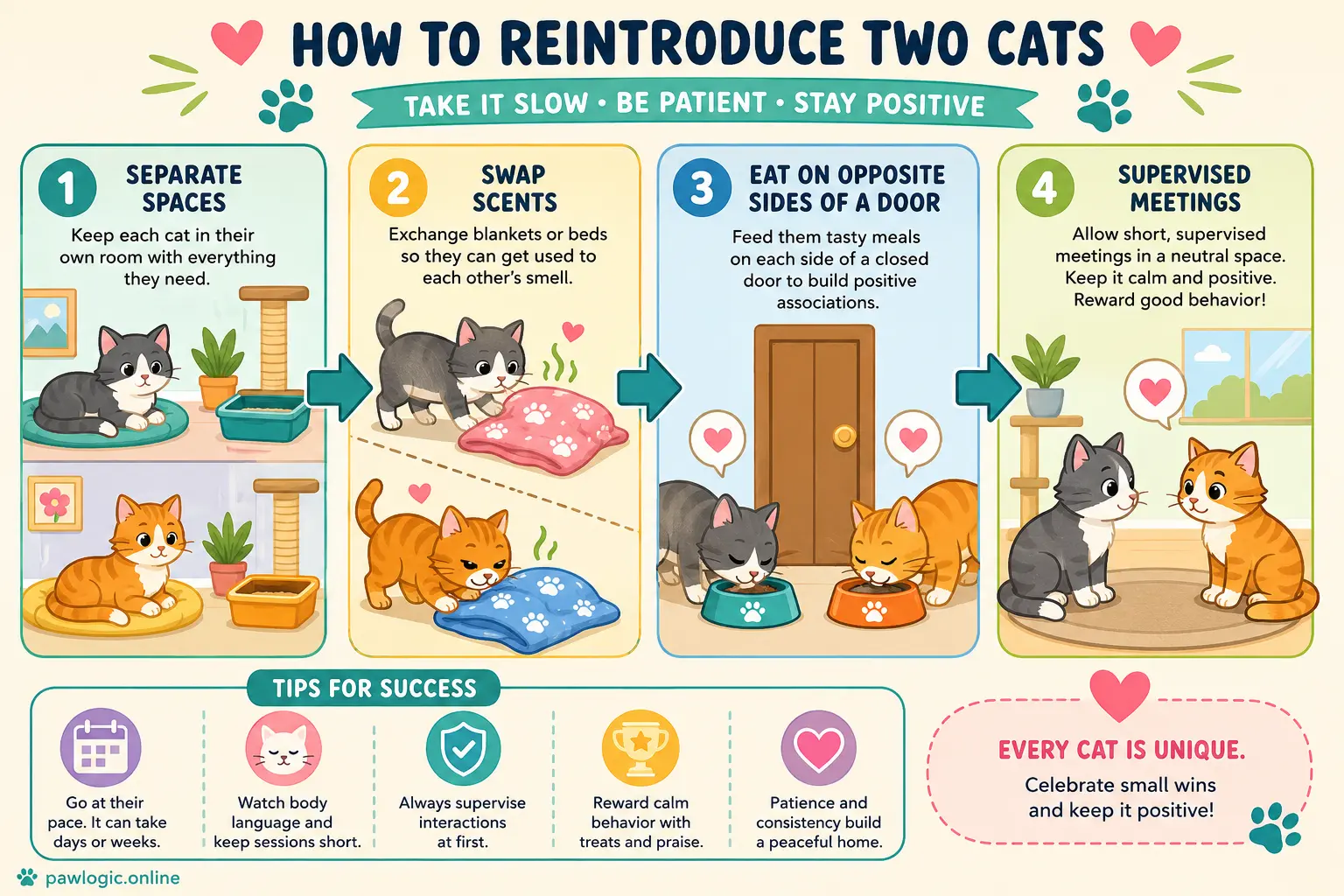
When cats develop serious hostility, reintroduction is often the safest path forward. This process essentially allows the relationship to restart from scratch in a controlled, low-stress way.
The first step is complete separation. Each cat should have its own safe area with food, water, litter boxes, bedding, toys, and resting spots. This separation is not punishment. It is emotional decompression. Cats need time to calm down before learning can happen.
Scent swapping comes next. Cats rely heavily on smell to identify safety and familiarity. Owners can gently rub each cat with separate cloths and exchange the scents between rooms. Bedding swaps also help. The goal is to rebuild neutral or positive associations without direct confrontation.
Behavior experts and feline studies consistently emphasize gradual introductions rather than immediate face-to-face encounters. Visual exposure should happen slowly using cracked doors, baby gates, or screen barriers. During these sessions, both cats should receive positive rewards like treats, meals, or playtime. The message becomes: “Good things happen when the other cat appears.”
Progress should move at the pace of the most nervous cat. Rushing the process almost always backfires. Some cats need days. Others need months. Owners often underestimate how emotionally intense feline social conflict can become.
Interactive play is especially valuable during reintroduction because it redirects energy away from confrontation. Wand toys, puzzle feeders, and treat hunts help reduce tension while building confidence. Structured routines also create predictability, which lowers stress.
A gradual reintroduction process may feel painfully slow, but slow progress is still progress. Think of rebuilding trust like repairing cracked glass. If you rush, the damage spreads.
How Territory and Resources Influence Behavior
Territory is the invisible architecture behind feline relationships. Cats organize their world through safe zones, escape routes, scent markers, and predictable access to resources. When this structure breaks down, conflict increases.
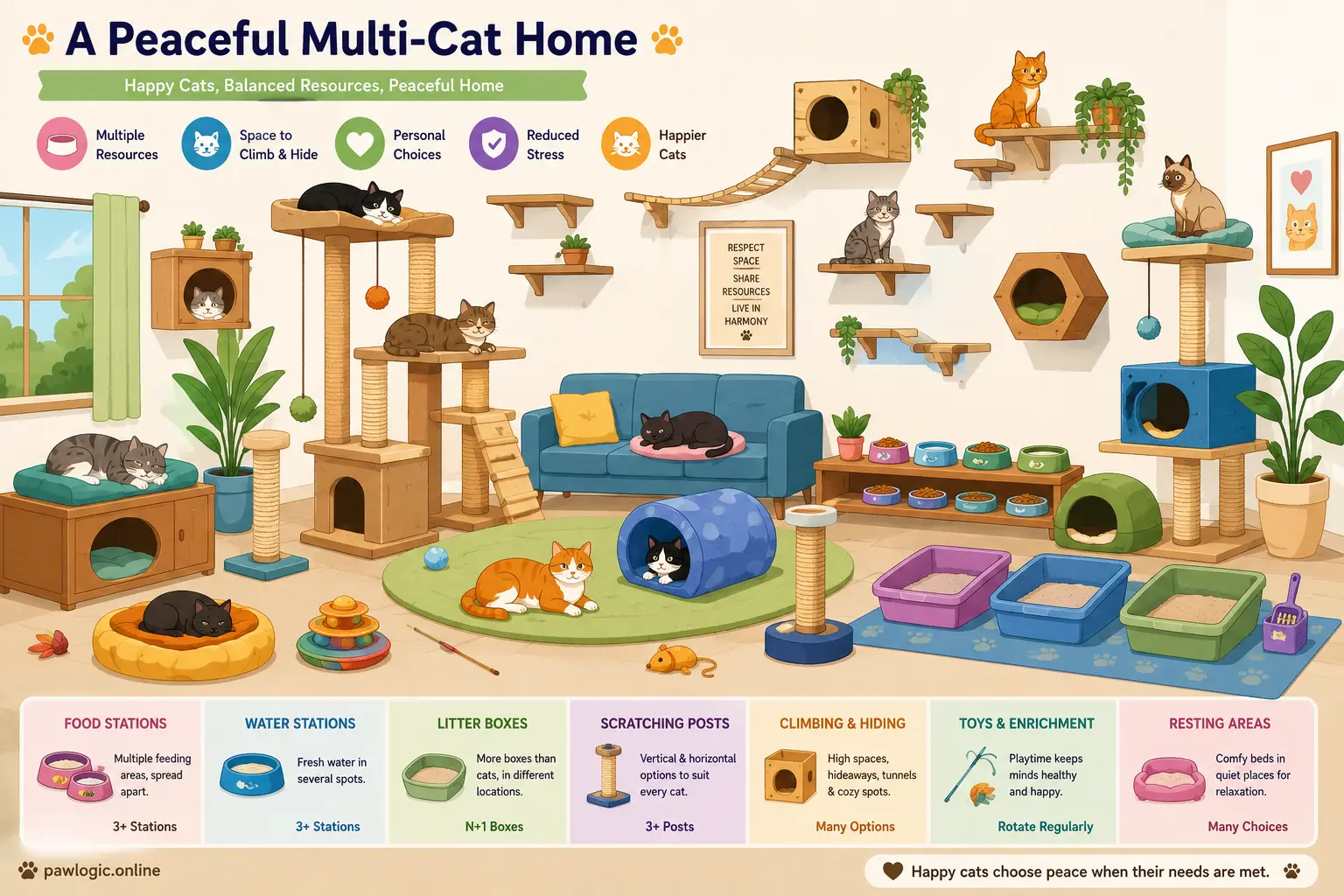
Vertical space is one of the most overlooked solutions in multi-cat homes. Cats naturally feel safer above ground level because elevated positions provide security and observation points. Cat trees, shelves, window perches, and climbing systems allow cats to avoid direct confrontations without feeling trapped. In homes with limited floor space, vertical territory can dramatically reduce tension.
Resource distribution matters just as much. A common behavioral recommendation is the “n+1 rule” for litter boxes: one litter box per cat plus one extra. Food bowls, water stations, scratching posts, and sleeping areas should also exist in multiple locations. Clustering everything together creates competition zones.
Here is a simple resource guideline table:
| Resource | Recommended Number |
|---|---|
| Litter Boxes | Number of cats + 1 |
| Feeding Stations | Multiple separate locations |
| Water Bowls | Several throughout home |
| Scratching Posts | At least one per cat |
| Elevated Resting Areas | Multiple vertical options |
Environmental enrichment is equally important. Bored cats are more likely to fixate on one another. Puzzle feeders, climbing structures, bird-watching stations, and daily play sessions help release mental and physical energy in healthier ways.
Research into feline social behavior suggests that environmental stress strongly influences household conflict levels. A well-designed environment acts almost like traffic engineering for cats. It reduces collisions, prevents bottlenecks, and creates emotional breathing room.
Creating a Home Environment That Reduces Rivalry
Peaceful cat households rarely happen by accident. They are usually built through consistent routines, smart environmental management, and emotional stability.
Predictability matters enormously to cats. Feeding at regular times, maintaining familiar sleeping areas, and avoiding sudden disruptions all help lower stress. Cats thrive when they can anticipate what comes next. In unpredictable homes, anxiety often rises quietly beneath the surface.
Interactive play should become part of the daily routine. Many aggressive cats are actually overstimulated, under-stimulated, or frustrated predators with excess energy. Wand toys mimic hunting behaviors and provide healthy emotional outlets. A tired cat is usually a calmer cat.
Owners should also create multiple “safe escape” areas where cats can retreat without being followed. This might include covered beds, shelves, closets, or quiet rooms. Cats need the ability to disengage socially. Imagine living in a house where someone could follow you into every room at all times. Stress would become unavoidable.
Window management sometimes becomes necessary too. If outdoor cats trigger aggression, blocking visual access temporarily can reduce arousal. Frosted window film, curtains, or strategic furniture placement may help.
Emotional energy inside the home affects cats more than many people realize. Loud conflict, chaotic routines, and owner anxiety can influence feline stress levels. Cats are incredibly observant animals. They notice changes in tone, body language, and routine quickly.
Building harmony is less about forcing friendship and more about reducing pressure. Some cats become close companions. Others simply learn peaceful coexistence. Both outcomes are valid.
When Ongoing Aggression Requires Professional Help
Some aggression cases go beyond what owners can safely manage alone. If cats are causing injuries, drawing blood, attacking humans, or living in constant fear, professional intervention becomes important.
Veterinarians should always rule out medical problems first. Sudden aggression can stem from pain, neurological conditions, hormonal issues, or sensory decline. Treating the medical cause may dramatically improve behavior.
Veterinary behaviorists and certified feline behavior consultants specialize in more complex cases. They analyze household structure, environmental triggers, routines, emotional patterns, and individual cat personalities. In severe situations, medication may be recommended alongside behavior modification.
Many owners resist medication because they fear it will “change” their cat. In reality, behavioral medication can reduce overwhelming anxiety and help cats learn calmer responses. Some cats remain too stressed to benefit from training alone. Medication simply lowers the emotional volume enough for progress to happen.
Professional help becomes especially important when owners feel emotionally exhausted. Chronic feline aggression can create enormous stress inside households. Sleep disruption, emotional burnout, neighbor complaints, and constant separation routines can overwhelm even deeply devoted cat owners. Real-life accounts from owners dealing with long-term aggression frequently describe feelings of hopelessness and emotional exhaustion.
Seeking help is not failure. It is responsible care.
Conclusion
Stopping cats from fighting requires patience, observation, and a willingness to understand the world from a feline perspective. Most aggression is rooted in fear, territory, stress, or competition rather than pure hostility. Once owners recognize the emotional triggers behind the behavior, solutions become far more effective.
The difference between playful wrestling and real aggression matters enormously. Early warning signs like staring, stalking, and tension around resources should never be ignored. Small behavioral clues often appear long before full fights erupt.
Creating a peaceful multi-cat home is less about forcing friendship and more about reducing pressure. Proper introductions, environmental enrichment, vertical space, predictable routines, and resource distribution all play major roles in lowering conflict. Some cats eventually become inseparable companions, while others simply learn respectful coexistence. Either outcome is success.
When aggression becomes severe or dangerous, professional guidance can transform situations that feel impossible. Cats are highly emotional, intelligent animals, and with the right approach, even deeply strained relationships can improve over time.
FAQs
1. How can I tell if my cats are playing or actually fighting?
Playful cats usually take turns chasing and wrestling without intense vocalization. Real fighting includes hissing, screaming, flattened ears, puffed fur, rigid body posture, and one cat trying to escape while the other pursues aggressively.
2. Should I let cats “fight it out” on their own?
No. Allowing repeated fights usually strengthens fear and hostility. Cats do not typically resolve serious aggression through dominance battles the way many people assume.
3. How long does it take to reintroduce fighting cats?
It depends on the severity of the conflict. Some cats improve within weeks, while others require several months of gradual reintroduction and environmental adjustments.
4. Can outdoor cats really trigger aggression inside the home?
Yes. Seeing or smelling unfamiliar outdoor cats can create redirected aggression, where an indoor cat attacks another household cat because it cannot reach the outside trigger.
5. When should I contact a veterinarian or behavior specialist?
Seek professional help if aggression causes injuries, escalates suddenly, involves attacks on humans, or does not improve despite environmental and behavioral changes.

Corbin Hale is a 29-year-old American content writer based in Boise, Idaho. He has spent several years creating well-researched articles about pets, home living, and practical lifestyle topics while contributing to websites such as pawlogic.online. His writing focuses on accuracy, reader-friendly explanations, and trustworthy information supported by careful research and real-world experience.