
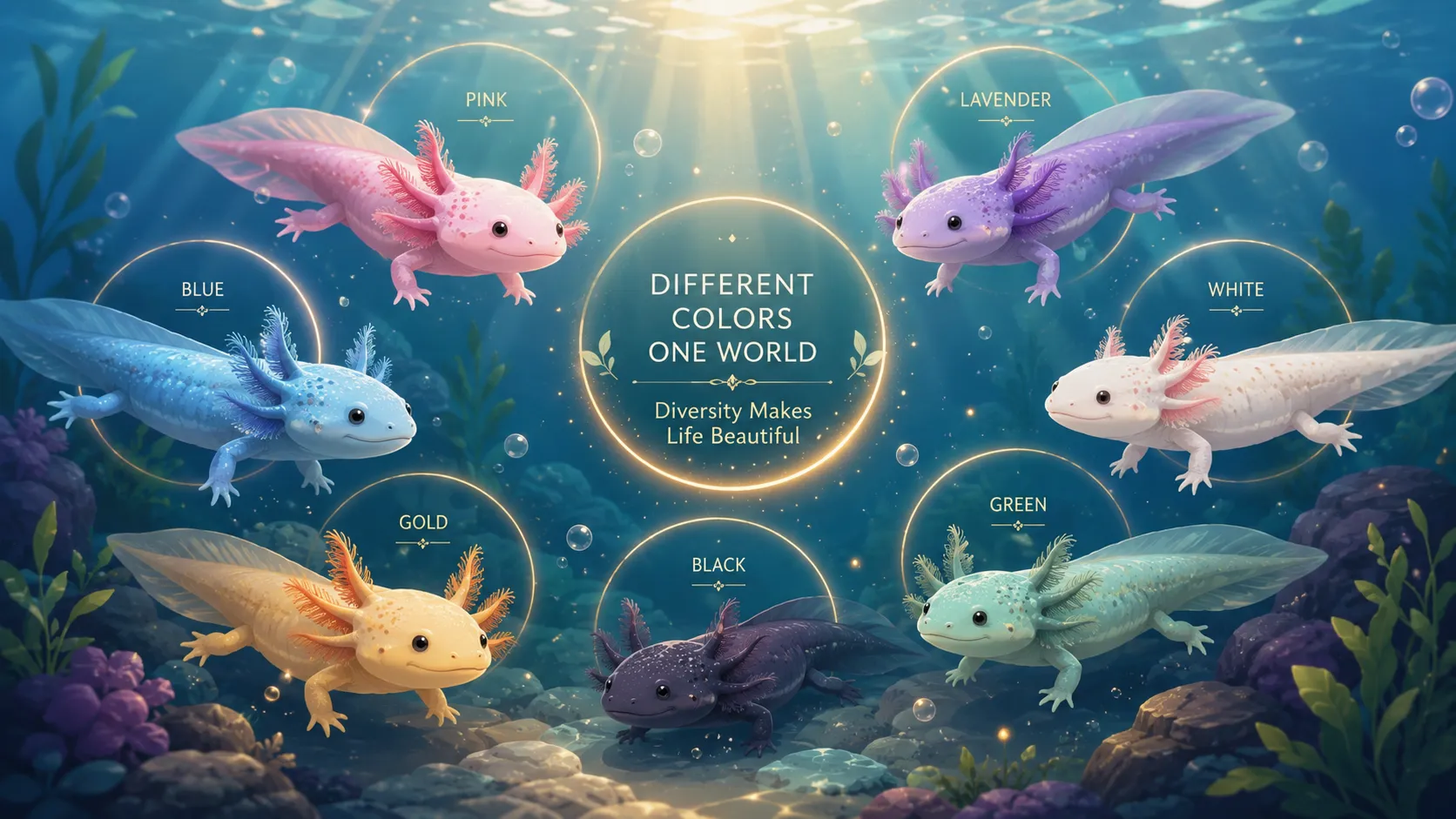
Axolotls are like living fantasy creatures that somehow wandered into the real world. With fluffy external gills, permanent smiles, and colors ranging from dark wild patterns to glowing gold and lavender shades, these amphibians have become one of the most fascinating exotic pets on the planet. But once people start exploring the hobby, one question always appears: How many types of axolotls are there?
The answer is more complicated than most beginners expect. Technically, all pet axolotls belong to the same species, yet breeders have created dozens of different morphs through selective genetics. Some are common and easy to find, while others are so rare that enthusiasts may wait years before seeing one in person. Wild axolotls, meanwhile, look dramatically different from many of the bright captive varieties circulating online today.
Recent breeder discussions and axolotl genetics resources also show growing interest in ethical breeding, genetic diversity, and misconceptions surrounding “new” morphs in the pet trade. Researchers and experienced keepers continue to warn that many unusual colors seen online are misunderstood, edited, or even fictional.
Understanding What “Types” of Axolotls Really Means
When people talk about different “types” of axolotls, they are usually referring to morphs, not entirely separate species. That distinction matters because it helps explain why two axolotls can look completely different while still belonging to the exact same species: Ambystoma mexicanum. One may appear dark brown with gold speckles, while another could be pale pink with glowing red eyes. To a beginner, they might seem unrelated. Genetically, though, they are simply different expressions of pigmentation and inherited traits.
This is similar to dog breeds in a loose visual sense, except axolotl morphs are mostly focused on coloration, skin appearance, and pigment distribution rather than body structure. Breeders selectively pair animals carrying specific genes in order to produce offspring with desired looks. Over decades, this has created a huge catalog of morph combinations in the pet trade. Some morphs are predictable because they follow simple recessive inheritance patterns, while others are random developmental accidents that cannot be intentionally reproduced.
The popularity of morphs exploded thanks to social media and aquarium communities. Suddenly, rare copper, lavender, and piebald axolotls became internet celebrities. Videos showcasing unusual colors attracted millions of views, and demand for rare morphs surged. This growing popularity also created confusion, because many sellers started marketing ordinary morphs under flashy names to increase prices. A dark melanoid became a “black dragon,” while edited photos convinced people that neon-blue axolotls existed naturally. The reality is far more grounded in genetics than fantasy.
Understanding morph terminology helps new keepers avoid misinformation. A morph is not a new species, nor does it automatically mean an axolotl is healthier, stronger, or rarer. In fact, some rare morphs are actually more fragile due to limited breeding lines and reduced genetic diversity. Responsible breeders focus not only on appearance but also on health, lineage tracking, and minimizing inbreeding risks within captive populations.
Wild Axolotls Compared to Captive Axolotls
Wild axolotls and captive-bred axolotls are almost like cousins who grew up in entirely different worlds. Wild individuals evolved for survival in the canals and lake systems of Xochimilco near Mexico City. Their dark coloration acts as camouflage against muddy bottoms, aquatic plants, and predators. Most wild axolotls display olive, gray, black, or brown tones mixed with subtle golden flecks. These colors are practical rather than decorative. A bright pink or golden axolotl in the wild would stand out like a flashlight in the dark and likely become an easy meal.
Captive axolotls, on the other hand, have been selectively bred for appearance rather than survival. Breeders intentionally pair animals carrying rare pigment mutations to create visually striking offspring. Over time, this produced morphs that simply would not survive well in nature. Leucistic axolotls with pale skin and red gills, for example, became one of the most recognizable pet morphs worldwide. Golden albinos, copper morphs, and GFP axolotls followed soon after. The aquarium trade transformed axolotls from hidden amphibians into living collectibles.
Scientists and conservationists often emphasize that captive morph diversity does not equal wild genetic health. Research discussions continue to warn that the global captive population originates from a relatively limited genetic foundation. This means even unrelated-looking morphs may still share significant ancestry. That is why ethical breeders maintain lineage records and avoid repeatedly breeding closely related animals together.
The contrast between wild and captive populations also creates misunderstandings online. Many people assume rare pet morphs naturally exist in Mexico’s waterways. In reality, most famous morphs are purely products of captive selection. Wild populations remain critically endangered despite the abundance of pet axolotls worldwide. Conservation breeding programs focus on preserving natural genetic traits rather than creating flashy new colors for collectors.
The Most Popular Axolotl Morphs in the Pet Trade
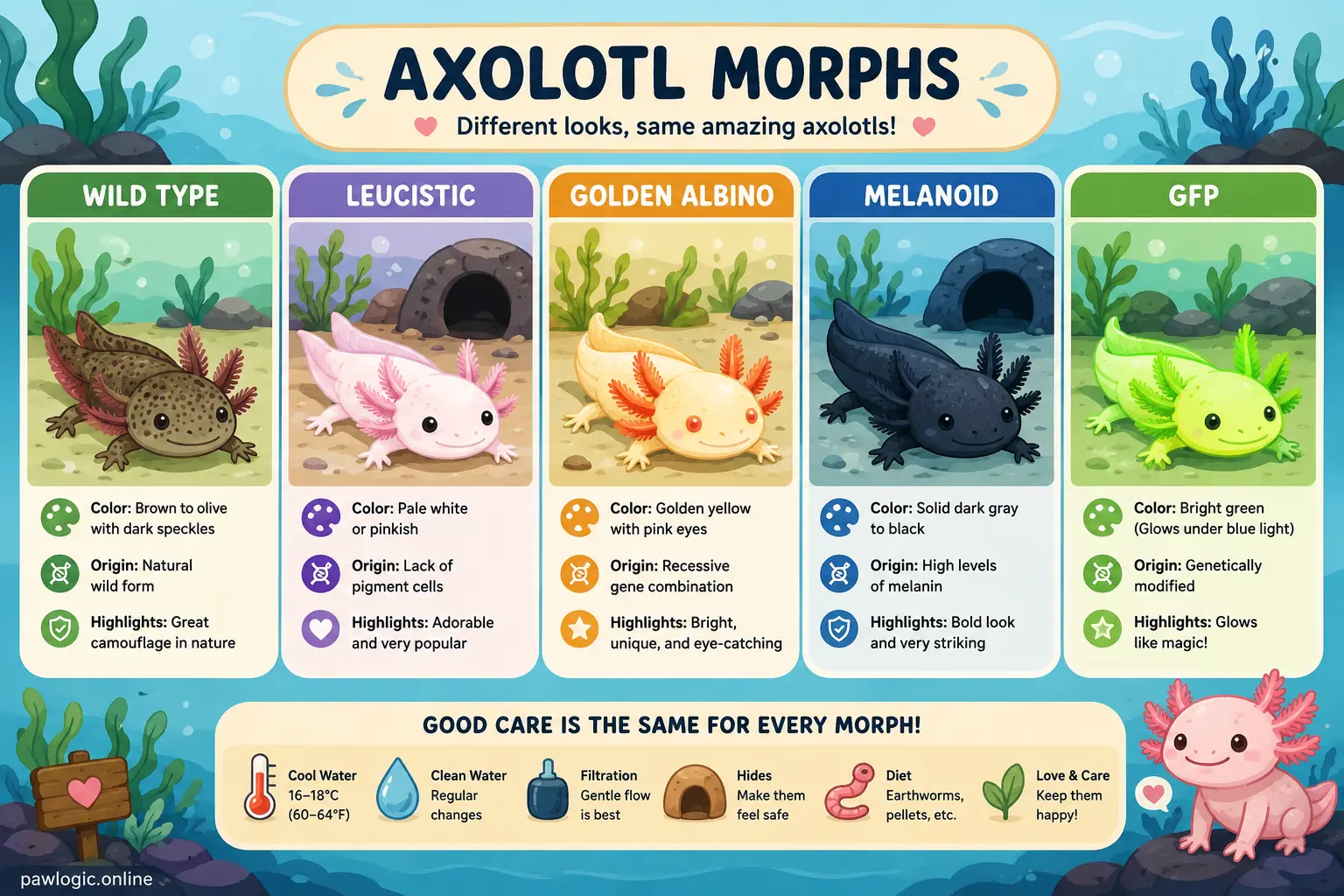
Some axolotl morphs dominate the pet world because they balance beauty, availability, and affordability. These are the morphs most beginners encounter when browsing breeders or aquarium stores. Each has distinct physical features that make it recognizable even to casual hobbyists.
| Morph | Main Appearance | Eye Color | Commonality |
|---|---|---|---|
| Wild Type | Brown/olive with gold flecks | Dark | Very Common |
| Leucistic | Pale pink/white body | Dark | Extremely Popular |
| Albino | Yellow or white without melanin | Red/Pink | Common |
| Melanoid | Deep black with reduced shimmer | Dark | Popular |
| Copper | Metallic brown/copper tones | Red | Rare |
| Lavender | Soft purple-gray appearance | Dark or red | Rare |
The wild type morph remains one of the healthiest and most naturally resilient varieties in captivity. Its darker camouflage coloration resembles true wild axolotls, complete with speckled gold iridophores. Many experienced keepers actually prefer wild types because they often show stronger contrast and dramatic patterns as they mature. Their appearance feels closer to the animal’s ancient origins.
The leucistic axolotl is arguably the face of the modern axolotl hobby. Its pale white-pink body combined with fluffy red gills gives it an almost cartoonish appearance. People often mistake leucistic animals for albinos, but there is a key difference: leucistics still have dark eyes because they retain some pigmentation. Their cute appearance helped axolotls explode in popularity across social media platforms and gaming communities.
Albino varieties remove melanin entirely, creating golden, yellow, or pale cream appearances paired with red eyes. Some golden albinos develop metallic shine that makes them look almost glowing under aquarium lighting. Melanoid morphs take the opposite route by intensifying dark pigmentation while reducing reflective cells. The result is a velvety black axolotl that looks incredibly dramatic in planted aquariums.
Each morph carries its own appeal, almost like choosing between different fantasy character designs. Some people love the ghostly elegance of leucistics, while others prefer the prehistoric vibe of wild types. That diversity is exactly why axolotls became such a sensation among exotic pet enthusiasts.
Rare Axolotl Morphs That Enthusiasts Love
Rare axolotl morphs are the crown jewels of the hobby. These are the animals that breeders discuss excitedly in forums, that collectors reserve months in advance, and that sometimes sell for surprisingly high prices. Their rarity usually comes down to genetics, breeding difficulty, or unpredictable developmental outcomes.
One standout is the copper morph, which displays warm metallic tones ranging from bronze to reddish-brown. Under the right lighting, copper axolotls almost shimmer like polished pennies. Their appearance results from recessive genetic combinations affecting melanin production. Years ago, copper morphs were considered extraordinarily difficult to obtain, although improved breeding lines have made them somewhat more available today.
Lavender and silver morphs represent another fascinating category. These axolotls show soft gray-purple hues that appear almost unreal. Some hobbyists describe them as looking like underwater smoke or moonlight reflected on stone. The rarity of these morphs comes from the complex gene combinations needed to produce consistent coloration. Because of this, prices often remain high compared to standard morphs.
Then there are the legendary mosaic and chimera axolotls. These are not ordinary morphs at all. Instead, they result from developmental anomalies involving multiple genetic cell lines within one animal. A chimera may display two completely different body colors split directly down the middle, almost as though two animals fused together during early development. Mosaics show patchy mixtures of pigmentation scattered unpredictably across the body. Experts consistently describe these animals as among the rarest axolotls in existence because they cannot be intentionally reproduced with reliability.
Why Chimeras Are Exceptionally Rare
Chimera axolotls are the unicorns of the amphibian world. They form when two fertilized embryos fuse together very early in development, creating one individual carrying two separate genetic populations. This can produce dramatic half-and-half coloration patterns that look almost digitally edited. Unlike standard morphs, chimeras are not inherited traits that breeders can selectively reproduce generation after generation. They occur by chance.
Because they are so unpredictable, many breeders may hatch thousands of eggs without ever producing a single true chimera. That unpredictability fuels enormous fascination within the hobby. Some enthusiasts spend years searching for one from trusted breeders. Their rarity has also led to scams and fake listings online, especially involving edited photographs designed to exaggerate coloration.
Interestingly, many so-called “rare new morphs” promoted online turn out to be either mosaics, chimeras, or simple marketing rebrands of existing morphs. Understanding this helps hobbyists separate genuine genetic rarity from internet hype.
How Genetics Shape Axolotl Appearance
Axolotl genetics are surprisingly complex for an animal that often looks so simple at first glance. Behind every color pattern lies an intricate system of inherited genes controlling pigment cells, reflective structures, and developmental pathways. According to axolotl genetics resources, pigment is controlled through specialized chromatophores including melanophores, xanthophores, and iridophores. Each contributes different shades and reflective qualities to the final appearance.
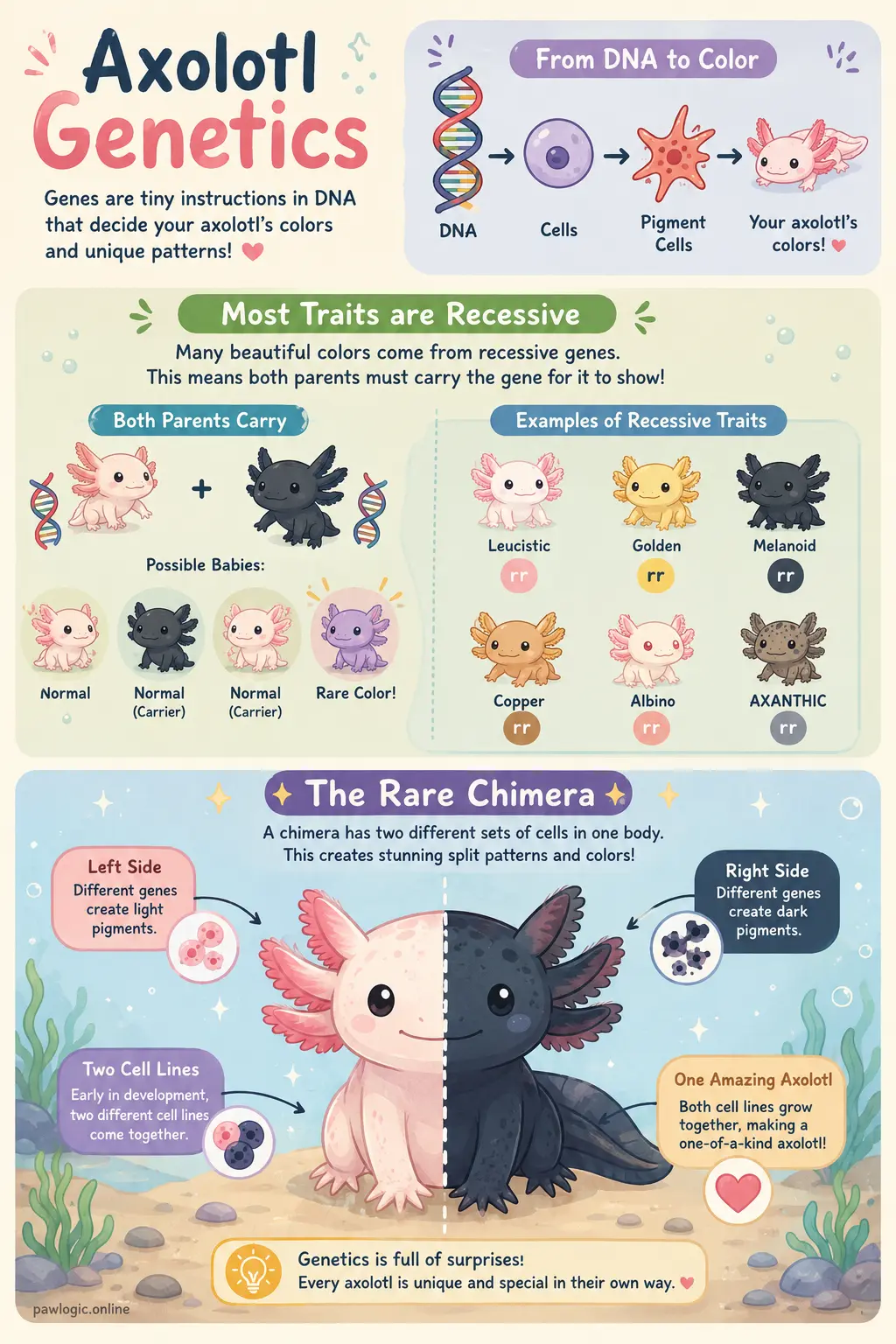
Melanophores produce dark pigments like black and brown. Xanthophores handle yellow and reddish pigments, while iridophores create reflective or shiny effects. Different morphs emerge depending on how these cells interact and whether certain genes activate or suppress them. A melanoid axolotl, for example, reduces iridophore activity, creating that signature matte-black appearance. Albinos remove melanin production entirely, revealing lighter tones underneath.
Many axolotl morphs follow recessive inheritance patterns. This means both parents must carry the relevant gene for offspring to display the trait visually. Breeding rare morphs therefore becomes partly science and partly probability. A breeder pairing two carriers might still produce mostly ordinary-looking offspring, with only a small percentage expressing the rare desired appearance.
Genetics also explain why some morphs become controversial. Limited gene pools can increase health concerns when breeders focus too heavily on appearance instead of diversity. Experts within the axolotl community repeatedly stress the importance of ethical breeding practices, lineage tracking, and avoiding excessive inbreeding. Without responsible management, rare morphs can become genetically fragile over time.
The fascinating part is that genetics never behaves like a perfectly predictable machine. Two axolotls carrying identical morph labels may still look noticeably different due to subtle variations in expression. That unpredictability gives the hobby much of its excitement.
Misconceptions About “New” Axolotl Types
The internet has created an entire mythology around axolotl morphs. Every few months, viral posts appear claiming the discovery of a “new” type, often accompanied by heavily edited photos showing impossible colors. Beginners understandably assume these creatures are real because axolotls already look magical to begin with.
One of the biggest examples is the famous blue axolotl. Despite endless viral images, experts consistently note that truly natural blue axolotls do not exist in the wild. Most supposed blue morphs are either lighting tricks, edited photos, or dark melanoid/lavender combinations that appear bluish under certain aquarium setups. The myth persists because people desperately want the fantasy version to be real.
Another misunderstood category involves firefly axolotls. Unlike ordinary morphs created through selective breeding, fireflies involve surgically grafted body sections between two animals. Online discussions and hobbyist communities continue debating the ethics of these procedures. While visually striking, many enthusiasts argue they should not be treated as ordinary morphs because they are artificially modified rather than naturally inherited.
There are also misconceptions surrounding morphing axolotls. Some online users believe poor care forces axolotls to transform into terrestrial salamanders. Current discussions within the hobby strongly suggest genetics plays the central role instead. Historical tiger salamander genetics introduced into captive bloodlines may contribute to this phenomenon in some cases.
Understanding these misconceptions protects beginners from scams, misinformation, and unrealistic expectations. The axolotl hobby is already fascinating without needing fantasy exaggerations.
Caring for Different Morph Varieties
Most axolotl morphs share the same basic care requirements, but certain varieties can have additional sensitivities that owners should understand. Morph does not completely change husbandry needs, yet pigmentation differences sometimes influence light sensitivity, stress responses, or visibility of health issues.
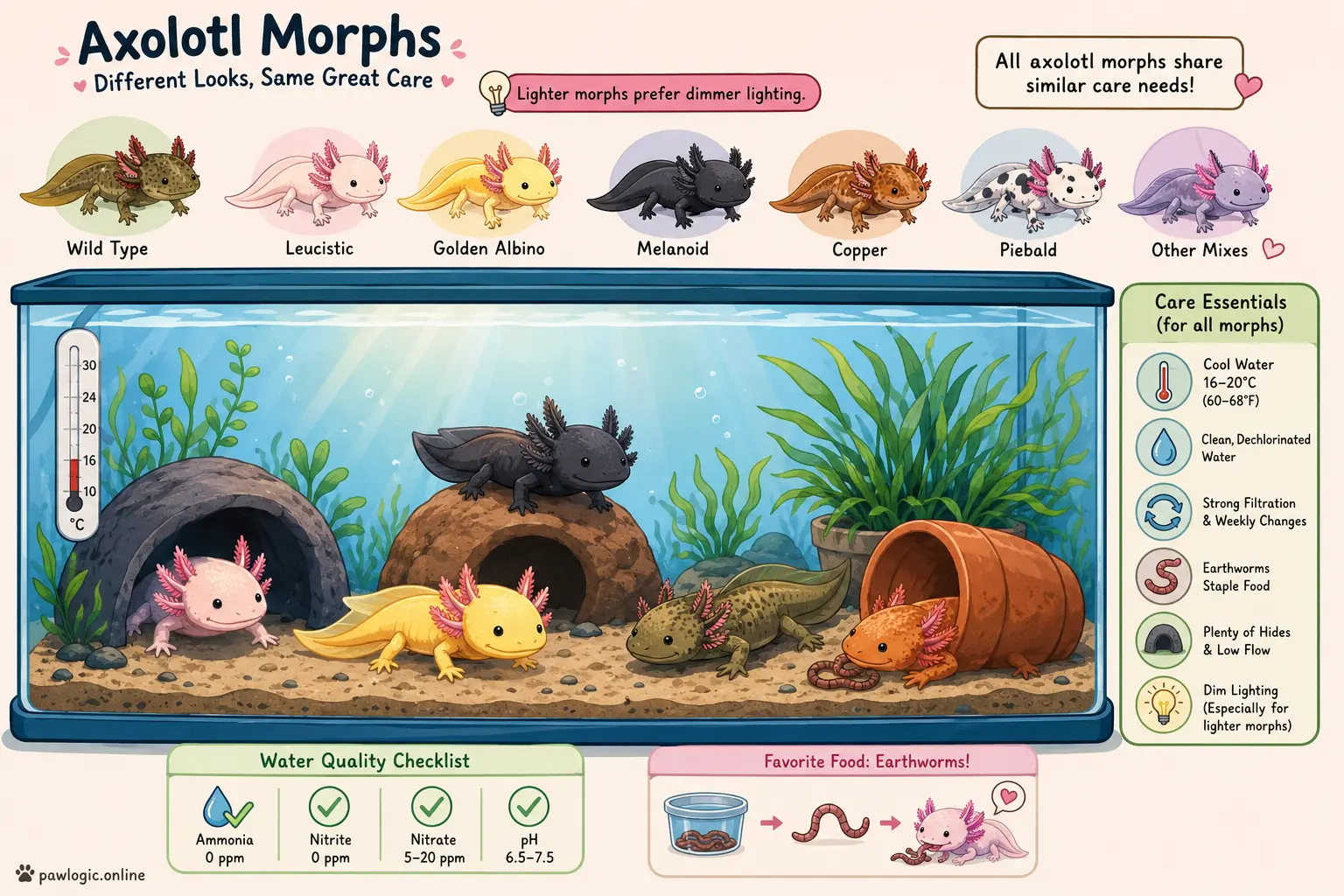
Albino and leucistic morphs, for example, tend to be more sensitive to bright lighting because of reduced pigmentation. Their eyes lack the protective dark coloration found in wild-type or melanoid axolotls. Many keepers therefore provide shaded hides, dim aquarium lighting, or heavily planted tanks for these lighter morphs. Watching a leucistic axolotl retreat from bright light is almost like seeing someone squint in direct sunlight after leaving a dark room.
Darker morphs such as melanoids often hide illness differently because redness, fungal patches, or skin irritation may be harder to notice against black pigmentation. Owners need to pay closer attention to appetite, gill posture, and behavior rather than relying only on visible skin changes. Copper and lavender morphs can also display subtle stress coloration shifts that beginners may misinterpret.
Feeding requirements remain broadly similar across morphs. Earthworms, high-quality pellets, and protein-rich diets work well for most healthy adults. Water quality remains vastly more important than morph selection. A rare chimera kept in poor conditions will decline faster than a common wild type living in stable, cool, clean water.
Rare morphs may also come with hidden challenges linked to breeding history. Some lines have reduced genetic diversity because breeders focused intensely on preserving specific visual traits. That is why responsible sourcing matters so much. Buying from ethical breeders who track lineage and prioritize health dramatically reduces the risk of future complications.
What Makes Certain Morphs Harder to Find
Rarity in axolotls comes from several overlapping factors. Sometimes the issue is simple probability. Other times, ethical breeding limitations, unpredictable genetics, or low hatch survival rates reduce availability dramatically.
Recessive traits play a major role. If both parents must carry hidden genes to produce a particular morph, the odds shrink quickly. A breeder may hatch hundreds of eggs yet produce only a handful displaying the desired appearance. Complex multi-gene combinations reduce those probabilities even further. That is why lavender, silver, and piebald morphs remain uncommon despite growing popularity.
Developmental anomalies like mosaics and chimeras exist in an entirely different category because they cannot reliably be reproduced through standard breeding. These animals are essentially genetic accidents. Their rarity is not just low probability; it is unpredictability itself. Breeders cannot simply “order” more chimeras into existence.
Ethics also influence rarity. Responsible breeders intentionally avoid excessive inbreeding even when it could increase production of valuable morphs. Maintaining healthy bloodlines requires introducing unrelated genetics and sometimes sacrificing visual consistency for long-term health. Experienced keepers increasingly support these ethical practices because they understand how fragile captive gene pools can become.
Demand creates another layer of scarcity. Viral social media trends can suddenly make one morph extremely popular overnight. Prices skyrocket, waiting lists grow, and availability disappears. This happened repeatedly with copper, piebald, and lavender lines as internet fascination expanded globally.
The irony is that rarity often has little to do with actual beauty. Some of the healthiest and most naturally striking axolotls remain ordinary wild types. Rare morphs simply tap into the human fascination with uniqueness, like collecting rare gemstones or limited-edition artwork.
Conclusion
Axolotls may belong to one species, but their incredible range of morphs makes them feel endlessly diverse. From dark wild-type animals resembling their endangered relatives in Mexico to shimmering copper, lavender, and mosaic varieties, the axolotl world blends genetics, science, art, and careful breeding into one fascinating hobby.
The difference between wild and captive axolotls tells an important story about survival versus selective aesthetics. Wild populations rely on camouflage and resilience, while captive breeding focuses heavily on visual traits. Along the way, breeders produced some astonishing morphs, including leucistic, albino, melanoid, copper, and even legendary chimeras.
At the same time, the hobby faces growing conversations about ethics, genetic diversity, and misinformation. Viral myths surrounding blue axolotls, artificially modified firefly varieties, and fake “new” morphs show how easily internet hype can blur reality. Responsible ownership means understanding the science behind these animals rather than chasing trends blindly.
What truly makes axolotls remarkable is not just their appearance. It is the combination of biology, regeneration, rarity, and personality packed into one permanently aquatic salamander. Whether someone chooses a common wild type or dreams of owning a mosaic chimera one day, every axolotl reflects a tiny piece of an extraordinary genetic puzzle.
FAQs
1. What is the rarest axolotl morph?
Most experts consider chimera and mosaic axolotls among the rarest because they occur through unpredictable developmental events rather than standard inheritance.
2. Are blue axolotls real?
True naturally blue axolotls do not exist in the wild. Many “blue” images online are edited or represent dark melanoid/lavender morphs under special lighting.
3. Which axolotl morph is best for beginners?
Wild type and leucistic axolotls are usually considered excellent beginner choices because they are widely available and generally hardy when bred responsibly.
4. Do rare morphs need different care?
Most morphs share similar care requirements, though lighter morphs like albinos and leucistics may be more sensitive to bright light exposure.
5. Why are some axolotls so expensive?
Rare morphs often require complex genetics, low-probability breeding outcomes, ethical breeding restrictions, and long waiting lists, all of which increase scarcity and price.

Dashiell Riggs is a 36-year-old American blogger from Asheville, North Carolina, with extensive experience writing educational and evergreen online content. As a regular contributor to pawlogic.online, he specializes in creating clear, engaging articles backed by reliable sources, making complex topics easy for readers to understand while maintaining strong editorial standards.