

Dogs have a funny way of turning the most ordinary moments into emotional experiences. You sit on the couch after a long day, lean back for a second, and suddenly your dog launches into a full face-licking mission like you’re the last ice cream cone on earth. Some owners laugh it off as affection. Others wonder if something deeper is happening. And honestly? Both reactions can be right.
Face licking in dogs is far more complicated than a simple “kiss.” It blends instinct, communication, emotional bonding, scent exploration, and sometimes stress management into one behavior. One dog may lick your face because it feels safe and attached to you, while another may do it because it’s anxious, overstimulated, or trying to gain your attention. The challenge is learning how to tell the difference.
Veterinary behavior experts and canine researchers continue to study licking behavior because it reveals so much about how dogs process social relationships. According to behavior experts cited by and , licking can represent affection, appeasement, curiosity, self-soothing, or even compulsive stress-related behavior.
Before pushing your dog away or encouraging the habit, it helps to understand what your dog is really trying to communicate.
The Natural Origins of Face Licking in Dogs
Puppy Instincts and Early Social Learning
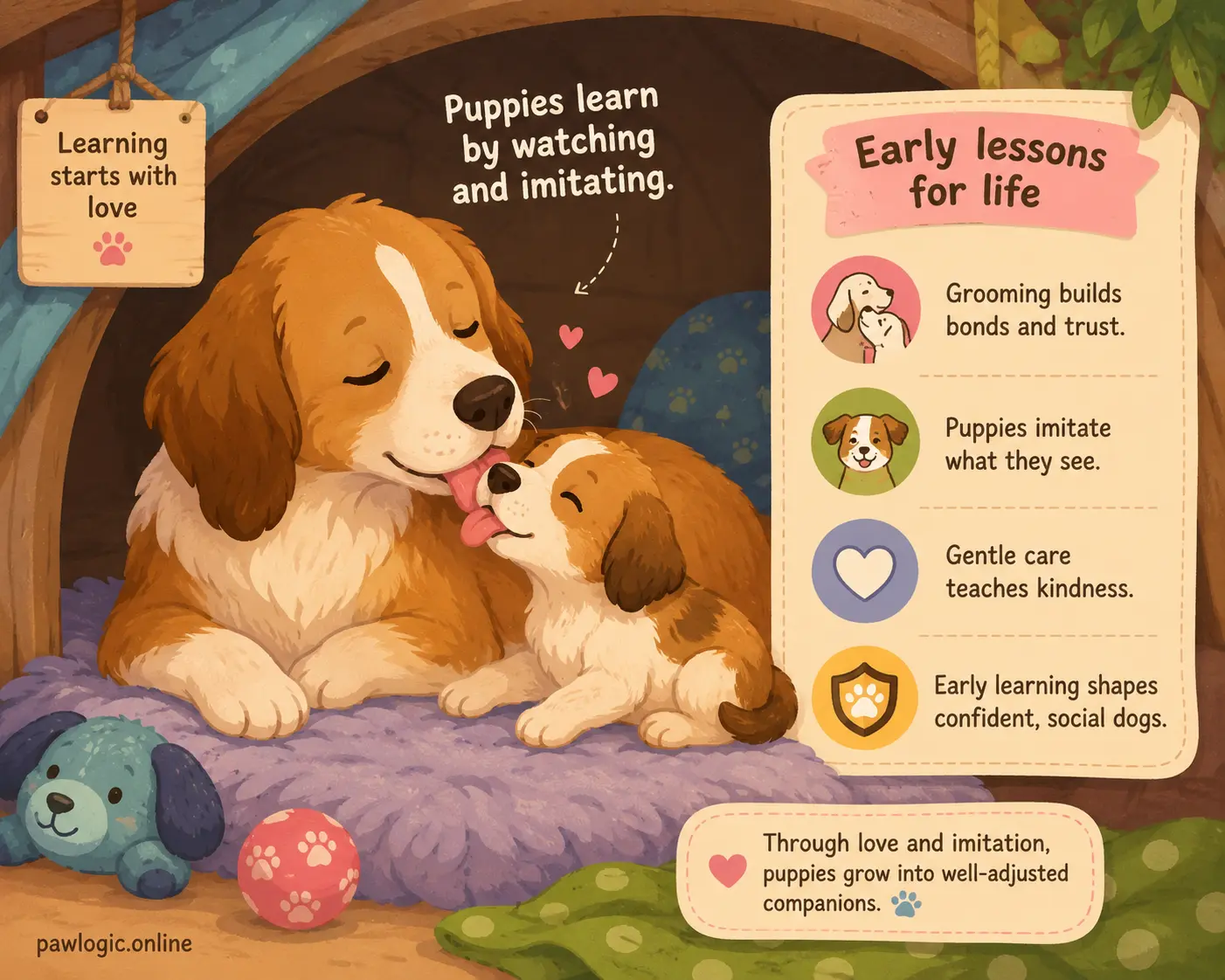
Dogs are not born randomly deciding to lick human faces. The behavior starts extremely early in life and has deep biological roots. Puppies lick their mothers almost immediately after birth, and mother dogs lick puppies to clean them, stimulate bodily functions, and strengthen social bonds. From the beginning, licking becomes associated with safety, caregiving, warmth, and survival itself.
As puppies mature, they continue using licking as a communication tool. In wild canine groups, young pups often lick around an adult dog’s mouth to encourage regurgitated food. That may sound unpleasant from a human perspective, but in the canine world it’s a perfectly normal survival behavior. Modern dogs still carry traces of these ancient instincts, even though their lives now revolve around squeaky toys and living room couches instead of hunting in packs.
This is why face licking often feels emotionally loaded. Your dog is not simply tasting your skin. Deep in its behavioral wiring, licking can represent trust, connection, and social closeness. That emotional layering explains why many dogs become especially affectionate through licking after periods of separation, stressful situations, or moments of excitement. Your return home can trigger the same emotional response a puppy once felt when reconnecting with its mother.
Behavior experts interviewed by explain that face licking is partly instinctual and partly learned through social reinforcement. The more emotionally rewarding the interaction becomes, the stronger the behavior tends to grow over time.
How Wolves and Wild Dogs Influenced Modern Behavior
Even though your dog may sleep under a blanket and refuse to walk in the rain, many canine social behaviors still connect back to their evolutionary ancestors. Wolves and wild dogs rely heavily on body language, scent exchange, and ritualized communication to maintain harmony inside the group. Licking plays a surprisingly important role in that system.
In pack settings, subordinate animals often lick more dominant members as a signal of peaceful intent. This is not necessarily fear-based submission like many people assume. It is more about maintaining social balance. Think of it like a polite handshake mixed with emotional reassurance. Dogs evolved to use physical gestures to avoid unnecessary conflict, and licking became one of those tools.
Modern pet dogs inherited these tendencies, but human households changed the context. Your dog may lick your face because it sees you as a trusted social figure, a source of safety, or simply a deeply familiar member of its “pack.” Some behaviorists even describe face licking as a canine version of emotional maintenance; a way to reconnect socially and keep bonds strong.
This helps explain why some dogs lick more intensely during emotionally charged moments. After arguments in the household, stressful vet visits, thunderstorms, or unfamiliar guests entering the home, licking behavior may increase dramatically. The dog is not being manipulative. It is often attempting to regulate social tension in the only language it truly understands.
The Social Meaning Behind Face Licking
Affection and Emotional Bonding
The simplest explanation is sometimes the correct one. Many dogs genuinely lick because they feel affection. According to animal behavior specialists cited by , licking commonly functions as a greeting and bonding behavior between dogs and humans.
If your dog rushes over tail wagging, body relaxed, eyes soft, and starts licking your face after you walk through the door, affection is probably the primary driver. Dogs associate their favorite people with comfort, excitement, food, safety, and routine. Face licking becomes part celebration and part emotional connection ritual.
Interestingly, dogs may also lick when they sense human sadness or emotional distress. Research discussed by canine behavior experts suggests some dogs display empathy-related licking behaviors toward crying owners. That’s why so many owners notice their dog licking tears, pressing close during emotional moments, or becoming unusually attentive when stress levels rise.
This emotional responsiveness is one reason humans feel such powerful attachment to dogs. Their affection feels physical and immediate. A dog does not send a polite text message asking if you’re okay. It barrels toward your face with complete emotional honesty.
Submission and Appeasement Signals
Not all face licking is joyful affection. Sometimes it reflects uncertainty or appeasement behavior instead. Canine communication is layered, and licking can carry different meanings depending on body posture and context.
A nervous dog may lick repeatedly while avoiding eye contact, lowering its body, pinning its ears back, or turning away between licks. In these situations, the licking functions less like “I adore you” and more like “Please stay calm, I mean no harm.” Experts sometimes call this a calming signal.
This distinction matters because owners occasionally misinterpret stress-related licking as affection. A dog overwhelmed by children, loud visitors, forced hugging, or social pressure may lick intensely while actually feeling anxious inside. Some behaviorists even use the phrase “kiss to dismiss” to describe dogs that lick people in an attempt to create distance or reduce tension.
That does not mean face licking is dangerous by default. It simply means context matters. A relaxed, wiggly dog licking during cuddles communicates something very different from a stiff, overwhelmed dog frantically licking while cornered.
Why Human Faces Fascinate Dogs
Taste, Sweat, and Natural Skin Chemistry
As romantic as owners sometimes make face licking sound, there’s another truth dogs would probably admit if they could speak: humans taste interesting.
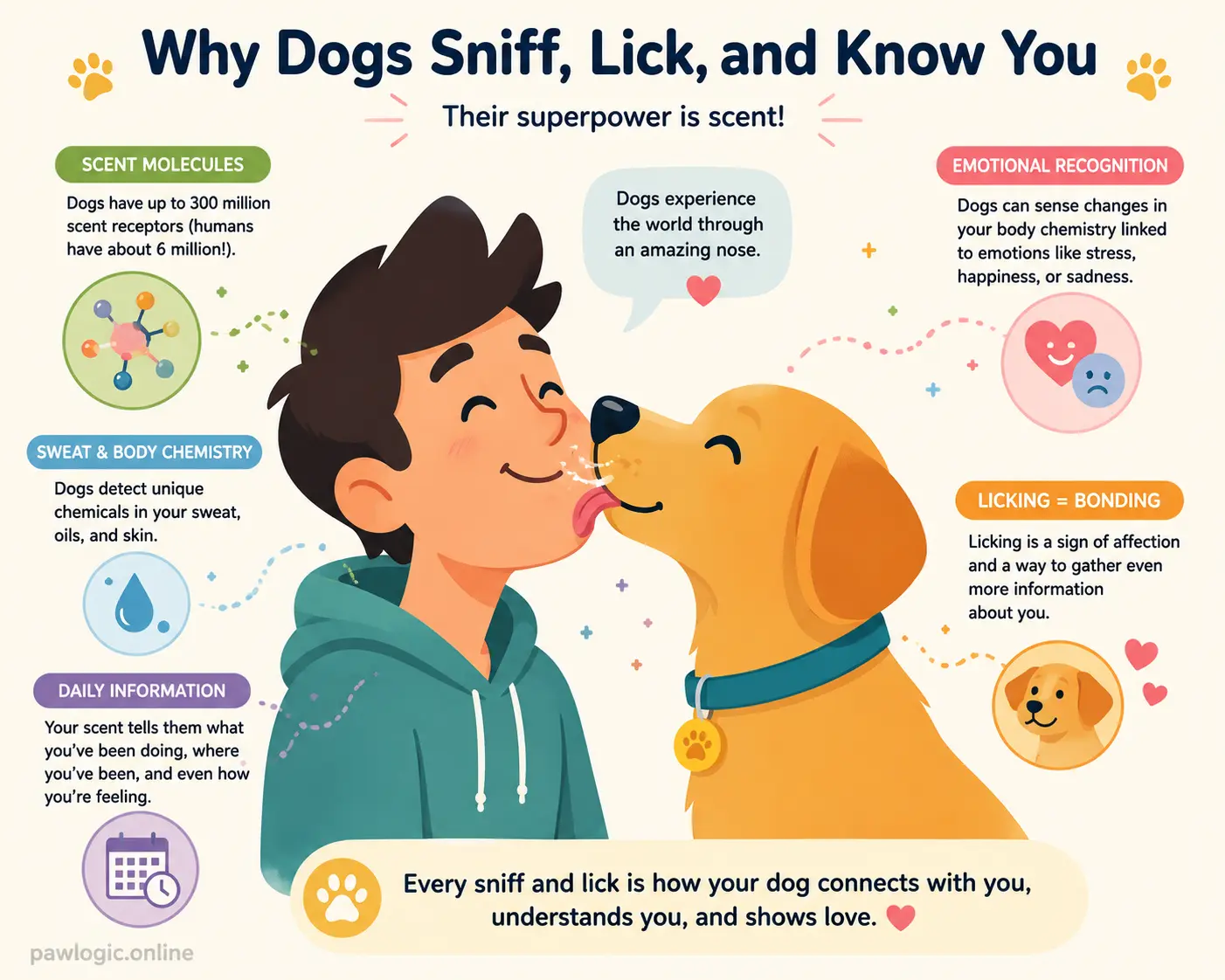
Human skin carries sweat, oils, food residue, lotions, salt, and scent particles that dogs find fascinating. Dogs experience the world primarily through smell and taste, so your face becomes a rich sensory landscape. According to veterinary experts at , lips and facial skin contain especially appealing smells because of food particles and natural skin secretions.
That’s why dogs often become more enthusiastic about licking after meals, workouts, showers, or skincare routines. Salty skin, scented moisturizer, or traces of food can turn your face into the canine equivalent of an interactive tasting menu.
This sensory curiosity does not reduce the emotional side of licking. In reality, both motivations often overlap. Dogs bond socially while simultaneously exploring the environment through taste and scent. Imagine greeting a friend while also reading a newspaper headline about their emotional state. Dogs process multiple layers of information at once.
Smell-Based Communication and Recognition
Humans rely heavily on spoken language and facial expressions. Dogs rely far more on scent. Your smell tells your dog about your mood, recent activity, stress levels, health, and familiarity.
When dogs lick your face, they may be gathering information as much as expressing affection. Stress hormones, sweat composition, and even emotional changes subtly alter human scent profiles. Dogs are remarkably sensitive to these changes. This is partly why many dogs behave differently around anxious or upset owners.
Some dogs become persistent lickers specifically during emotionally intense moments because licking helps them reconnect socially and process changing emotional cues. It acts almost like canine emotional scanning. One Reddit discussion among dog owners described dogs licking more heavily during cuddling, emotional distress, or periods of household tension.
The emotional bond between dogs and humans is built partly through these repeated sensory exchanges. Your dog is not just recognizing your face visually. It’s recognizing your entire emotional and biological presence.
Attention-Seeking and Reinforced Habits
How Owners Accidentally Encourage Excessive Licking
Dogs are excellent behavioral economists. They quickly learn which actions produce rewarding outcomes. If face licking consistently earns laughter, petting, talking, eye contact, or excited reactions, the behavior becomes highly reinforced.
This creates a cycle many owners never notice at first. A puppy licks your face once. You laugh and cuddle it. The puppy learns licking equals attention. Weeks later the licking becomes constant because the reward system keeps strengthening the behavior.
What surprises many people is that negative reactions can reinforce licking too. Pushing your dog away, shouting, or dramatically reacting still provides attention. From the dog’s perspective, the interaction succeeded. This explains why some dogs intensify licking behavior the more owners protest.
Experts from note that dogs often struggle to distinguish between positive and negative attention in social interactions. If licking always sparks engagement, many dogs continue doing it enthusiastically.
Why Reactions Matter More Than Words
Dogs do not understand long explanations about personal boundaries. They understand patterns. If one family member encourages face licking while another punishes it, the dog receives mixed signals that create confusion.
Consistency matters enormously when shaping behavior. Owners who want to reduce excessive licking should calmly redirect the dog instead of turning the interaction into a dramatic emotional event. The calmer and more predictable the response, the easier it becomes for the dog to learn alternative ways of seeking connection.
This does not mean affection should disappear. Dogs thrive on emotional interaction. The goal is simply teaching boundaries without damaging trust. Think of it like teaching a child not to shout indoors. The relationship remains loving, but the communication style becomes healthier for everyone involved.
When Face Licking Becomes Excessive
Anxiety and Stress-Related Licking
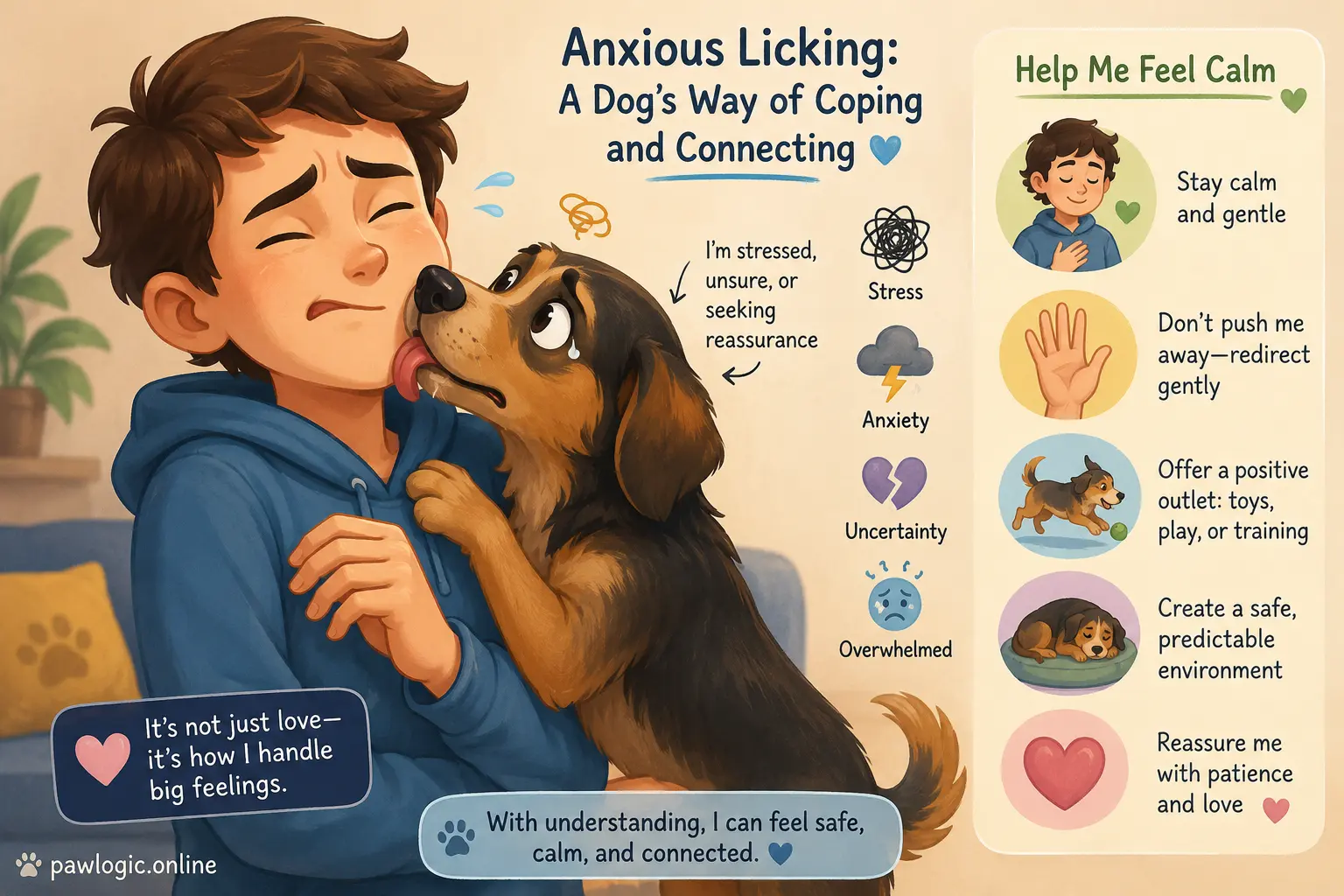
Occasional face licking is normal. Endless, frantic, difficult-to-interrupt licking may indicate something deeper. According to veterinary behavior experts, repetitive licking can become a self-soothing behavior linked to anxiety and emotional stress.
Licking releases calming neurochemicals including dopamine and endorphins. In stressful situations, dogs may rely on licking to regulate themselves emotionally. This explains why anxious dogs sometimes lick obsessively during storms, unfamiliar gatherings, vet visits, or major routine changes.
Owners often describe these dogs as “unable to stop.” Online discussions from dog owners frequently mention dogs licking faces, furniture, blankets, or hands for extended periods when anxious or overstimulated.
Signs that licking may be anxiety-driven include:
| Possible Stress Signals | What It May Mean |
|---|---|
| Repetitive nonstop licking | Emotional self-soothing |
| Difficulty interrupting behavior | Compulsive tendency |
| Panting or pacing alongside licking | Heightened stress |
| Dilated pupils or tense posture | Anxiety or discomfort |
| Licking during crowded situations | Social overwhelm |
Dogs experiencing chronic anxiety deserve compassion, not punishment. Excessive licking is often a symptom rather than the root problem itself.
Compulsive Behaviors and Emotional Regulation
In more severe cases, licking may develop into compulsive behavior patterns similar to repetitive stress habits in humans. Dogs sometimes lick themselves, furniture, floors, or owners continuously because the behavior temporarily relieves internal tension.
Behaviorists warn that compulsive licking should not be ignored if it escalates suddenly or becomes disruptive to daily life. Medical conditions such as allergies, gastrointestinal discomfort, pain, or neurological issues can also contribute to abnormal licking patterns.
This is where context becomes critical. A happy dog giving occasional face kisses after work is entirely different from a distressed dog obsessively licking every available surface for hours. The frequency, intensity, and emotional tone of the behavior tell the real story.
Situations That Trigger Persistent Face Licking
Excitement After Separation
Many dogs become extreme face lickers after reunions because separation intensifies emotional release. Your return home acts like emotional fireworks in the canine brain. Excitement, relief, anticipation, and affection all collide at once.
This is especially common in highly social breeds sometimes nicknamed “Velcro dogs.” These dogs crave physical closeness and emotional interaction. Face licking becomes part reunion ceremony and part emotional overflow.
The longer the separation, the more intense the greeting may become. Dogs living in highly structured households often predict daily routines almost perfectly, which means your arrival home can trigger emotional anticipation even before you open the door.
Stressful Environments and Social Pressure
Persistent licking also appears in emotionally challenging situations. Crowded homes, loud noises, unfamiliar visitors, rough child interactions, or tense household dynamics can all increase licking frequency.
Dogs sometimes use licking to diffuse tension the same way humans fidget, bite nails, or pace during stress. A nervous dog surrounded by overwhelming stimulation may lick owners continuously because physical contact provides reassurance.
Understanding these triggers helps owners respond intelligently rather than emotionally. The licking itself may not be the real issue. The environment causing the emotional overload may be the deeper problem needing attention.
Breed Personality and Individual Differences
Why Some Dogs Rarely Lick
Not every dog becomes a face-licking enthusiast. Some dogs barely lick at all, even when deeply bonded to owners. Personality, genetics, early socialization, and breed tendencies all influence licking behavior.
Independent breeds may show affection through proximity rather than physical licking. Older dogs also tend to lick less frequently than younger dogs, according to behavioral observations discussed in recent veterinary reporting.
This is important because owners sometimes worry unnecessarily when dogs avoid licking. Affection appears differently across individual dogs. One dog cuddles quietly. Another brings toys constantly. Another follows you from room to room like a furry security guard.
Why Velcro Dogs Tend to Overdo It
Highly social dogs often use licking as emotional glue. Breeds known for intense owner attachment may lick more because physical interaction strongly reinforces their sense of connection.
Dogs prone to separation anxiety or emotional sensitivity may also become persistent lickers because the behavior helps them feel regulated and reassured. These dogs are not trying to annoy anyone. Their emotional systems simply lean heavily toward closeness and reassurance-seeking.
Understanding your dog’s personality helps prevent unfair assumptions. What looks obsessive in one dog may actually reflect its natural communication style combined with environmental reinforcement.
Hygiene and Health Concerns Owners Should Know
Bacteria, Allergies, and Open Wounds
Even though face licking is usually harmless, hygiene still matters. Dog saliva contains bacteria that can occasionally create health risks, especially for vulnerable individuals.
Health experts interviewed by noted that certain bacteria such as Capnocytophaga canimorsus and Pasteurella multocida can pose risks for immunocompromised individuals.
Healthy adults generally face minimal risk from occasional licking, but precautions still make sense:
- Avoid allowing dogs to lick open wounds
- Wash skin after excessive licking
- Prevent dogs from licking medical devices or sensitive areas
- Use extra caution around infants, elderly individuals, or immunocompromised family members
Allergies also complicate things for some owners. Saliva proteins can trigger reactions in sensitive individuals even more than fur itself.
Safe Boundaries for Children and Vulnerable Adults
Children often encourage face licking because they find it funny or affectionate. The problem is that children may miss stress signals in dogs, especially if licking masks underlying anxiety.
Teaching children respectful dog interaction helps everyone stay safer. Dogs should always have the option to move away freely rather than feeling trapped in hugs or forced affection.
Healthy boundaries are not rejection. They create predictable interactions that help dogs feel secure while protecting human comfort and safety.
How to Set Healthy Boundaries Without Confusing Your Dog
Positive Reinforcement and Redirection
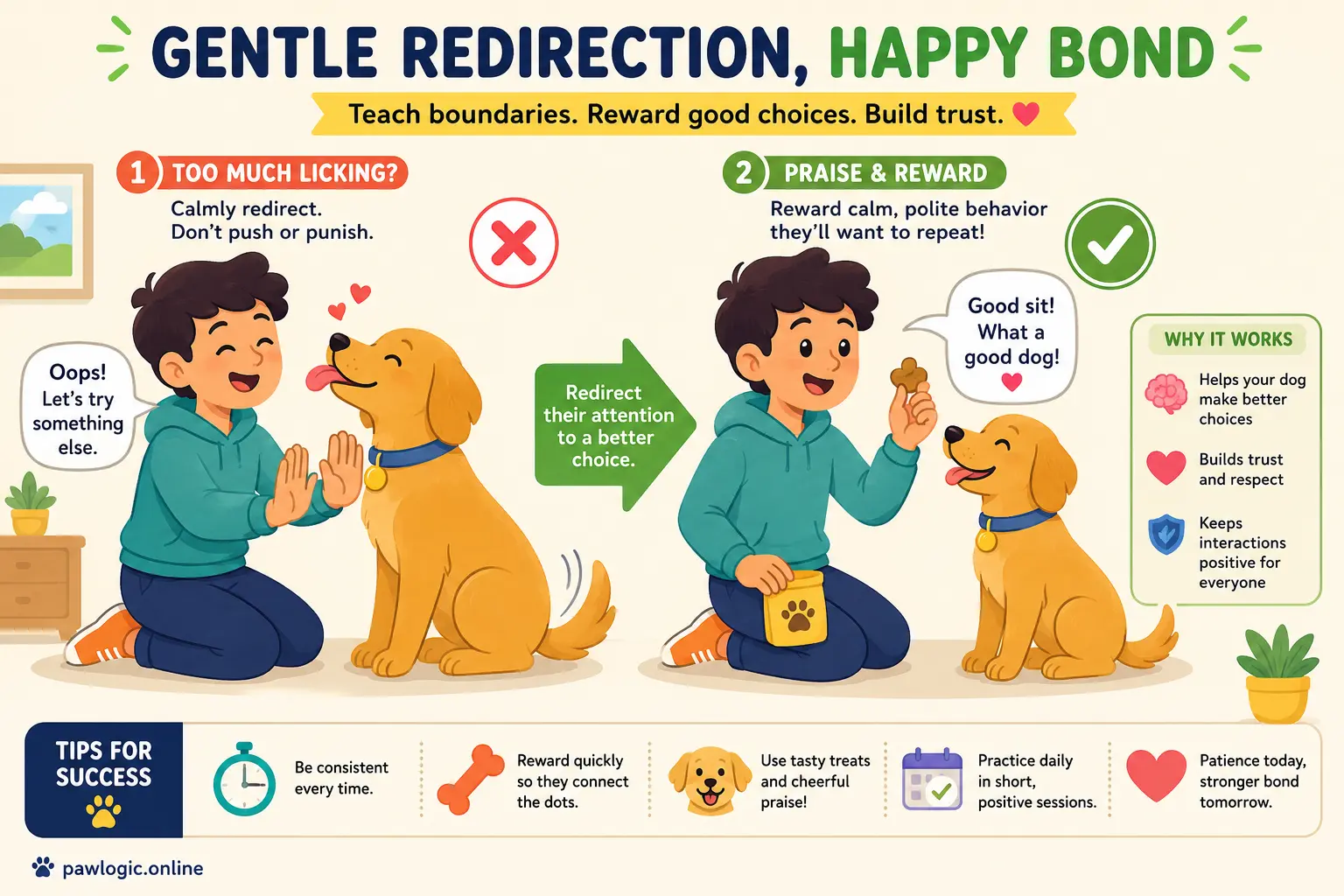
Stopping unwanted licking works best when owners teach alternative behaviors instead of simply punishing the dog. Redirecting the dog toward sitting calmly, accepting petting, or playing with a toy creates a healthier communication pattern.
If your dog begins excessive face licking:
- Stay calm and avoid dramatic reactions
- Gently move away or redirect attention
- Reward calm behaviors immediately
- Be consistent across all family members
- Increase exercise and mental stimulation if boredom contributes
Dogs learn through repetition and emotional clarity. Mixed signals only strengthen confusion.
Building Calm Affection Alternatives
Your dog still needs emotional connection. Replacing licking with calmer bonding activities often works surprisingly well. Snuggling, training games, chew toys, enrichment puzzles, walks, and structured affection sessions help dogs feel emotionally fulfilled without compulsive licking.
Experts frequently recommend enrichment activities such as lick mats, puzzle feeders, or calming chew routines for dogs prone to stress licking. These outlets provide sensory satisfaction while redirecting compulsive tendencies into healthier routines.
The goal is not emotional distance. It is emotional balance.
Conclusion
Face licking in dogs sits at the intersection of instinct, emotion, communication, curiosity, and habit. Sometimes it means pure affection. Sometimes it reflects excitement or attention-seeking. Sometimes it quietly reveals anxiety, insecurity, or emotional overload hiding beneath the surface.
The real key is context. A relaxed dog offering occasional face kisses during cuddles communicates something very different from a tense dog compulsively licking during stressful situations. Learning your dog’s body language transforms licking from a confusing habit into a meaningful form of communication.
Dogs do not speak with words. They speak through behavior patterns, emotional energy, and physical rituals built over thousands of years of social evolution. Face licking is one small piece of that language; messy, emotional, occasionally annoying, but deeply connected to the relationship dogs build with humans.
Healthy boundaries matter, but so does empathy. When owners respond thoughtfully instead of reactively, dogs learn safer, calmer ways to express connection without losing the emotional closeness they crave.
FAQs
Why does my dog lick my face specifically and not other people?
Dogs form different emotional bonds with different humans. Your scent, routines, emotional responsiveness, and interaction history all influence licking behavior. Dogs often lick the people they feel safest or most attached to.
Is constant face licking always a sign of affection?
No. While affection is common, excessive or frantic licking can also signal anxiety, stress, attention-seeking, or compulsive behavior. Body language and context help determine the real motivation.
Should I let my dog lick my face?
Occasional licking is usually harmless for healthy adults, but hygiene matters. Avoid allowing dogs to lick open wounds, mouths, or sensitive areas, especially around young children or immunocompromised individuals.
Why does my dog lick more when I’m sad or crying?
Dogs are highly sensitive to emotional changes in humans. Many dogs respond to sadness with comforting behaviors like licking, cuddling, or staying physically close.
How can I stop excessive face licking without hurting my dog’s feelings?
Use calm redirection and reward alternative behaviors instead of punishment. Consistency, enrichment activities, and positive reinforcement help dogs learn healthier ways to seek attention and connection.

Weston Crest is a 32-year-old American blogger based in Fort Collins, Colorado. He writes detailed, reader-focused articles for pawlogic.online with an emphasis on pets, outdoor living, and consumer education. His professional background in online publishing and dedication to accurate, useful information make his content both engaging and dependable.