
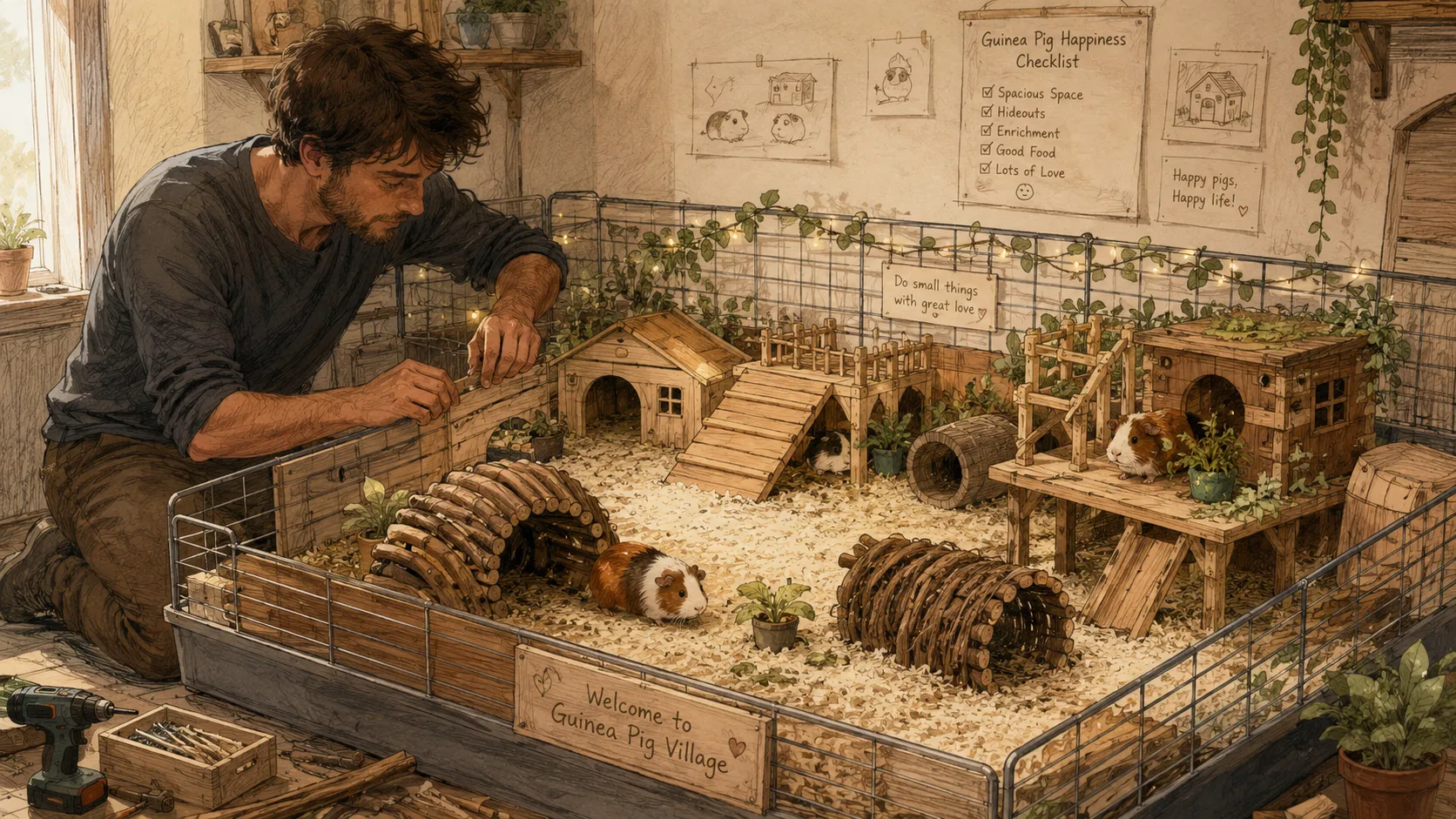
Guinea pigs may be small pets, but they need far more space, comfort, and environmental care than most new owners expect. Many store-bought cages are simply too cramped, poorly ventilated, and difficult to clean properly. Veterinary and animal care sources now consistently recommend larger enclosures with solid flooring, strong airflow, and separate living zones that encourage movement and reduce stress.
Before building your own setup, it helps to understand one simple truth: a good guinea pig cage is less like a decorative display and more like a functional miniature apartment. Your guinea pigs need room to run, hide, eat, sleep, explore, and feel safe at all times. The design choices you make directly affect their health, odor levels, behavior, and even lifespan.
Understanding What Guinea Pigs Need From a Cage
Building a proper guinea pig cage starts with understanding how guinea pigs actually behave. These animals are not climbers like rats or hamsters. They are ground-dwelling prey animals that rely on open running space, hiding spots, and predictable routines to feel safe. A cage that looks beautiful to humans can still be stressful or dangerous for guinea pigs if it lacks space and airflow. That’s why experienced owners often abandon tiny colorful pet-store cages and switch to larger custom setups.
Veterinary guidance now emphasizes that floor space matters more than height. Guinea pigs spend most of their lives moving horizontally, not vertically. Sources such as the and recommend large solid-bottom enclosures with excellent ventilation and enough room for exercise. A cramped cage creates a domino effect of problems. Guinea pigs become less active, urine accumulates faster, moisture increases, and respiratory infections become more likely. Stress also rises when guinea pigs cannot escape each other or establish personal territory.
Why Most Commercial Cages Are Too Small
Walk into almost any pet store and you’ll notice something strange. Many cages marketed specifically for guinea pigs barely provide enough room for a rabbit to turn around comfortably. Manufacturers often prioritize portability and visual appeal over animal welfare. The result is a cage that technically holds a guinea pig but does not support healthy living. It’s like asking someone to live permanently in a bathroom. Sure, it’s possible, but it’s hardly humane.
Recent care recommendations suggest at least 7 to 7.5 square feet for one guinea pig, while two guinea pigs often need 10.5 square feet or more. Male guinea pigs typically require even more room because territorial tension can increase in tighter spaces. Reddit communities dedicated to guinea pig care repeatedly warn new owners that undersized cages are one of the biggest mistakes beginners make.
Recommended Cage Dimensions for One or More Guinea Pigs
The best custom cages focus on long uninterrupted floor space. A rectangular design generally works better than a tall compact shape because it encourages running behavior. Here’s a practical comparison table based on modern housing recommendations:
| Number of Guinea Pigs | Minimum Recommended Space | Better Long-Term Size |
|---|---|---|
| 1 | 7–7.5 sq ft | 10+ sq ft |
| 2 | 10.5 sq ft | 13+ sq ft |
| 3 | 13 sq ft | 16+ sq ft |
| 4 | 16 sq ft | 20+ sq ft |
These measurements may seem surprisingly large for such tiny animals, but guinea pigs are naturally active creatures. Giving them more room reduces boredom, lowers aggression, and helps maintain healthier body weight. Bigger cages also stay cleaner longer because waste is spread across a larger area.
Planning a Cage Layout That Gives Guinea Pigs Room to Move
A well-designed cage layout works like a tiny city map. Every zone should serve a purpose while still leaving wide open pathways for movement. Guinea pigs love predictable routes and often create “zoomie highways” where they run laps around the enclosure. Blocking these routes with clutter can increase frustration and reduce activity levels. The smartest cage designs balance functionality with openness.
Many experienced owners use C&C cages made from storage cube grids and coroplast panels because they are modular, affordable, and easy to customize. These layouts allow you to expand the enclosure later without rebuilding from scratch. Think of it like adding extra rooms to a house instead of moving entirely.
Open Floor Space vs Multi-Level Designs
One of the most common misconceptions is that guinea pigs benefit from vertical climbing structures. In reality, excessive ramps and upper floors often waste usable running space. Guinea pigs have delicate backs and relatively poor climbing ability compared to other rodents. While a small loft can work for hay storage or lounging, it should never replace main floor space.
Open layouts support healthier exercise habits. When guinea pigs have uninterrupted lanes to run through, they naturally become more active. That activity supports digestion, prevents obesity, and reduces stress-related behavior. Many owners notice dramatic improvements in energy and social interaction once their pets move from cramped cages into spacious custom enclosures.
Designing Traffic Flow and Walking Paths
Imagine trying to walk through a crowded room filled with furniture blocking every corner. That’s exactly how a cluttered guinea pig cage feels. The best layouts include clear movement routes between sleeping areas, feeding stations, and hideouts. Guinea pigs like to move quickly between safe zones, especially when startled.
A practical design strategy is to place hides along the perimeter while leaving the center more open. Tunnels can connect different sections without interrupting movement. This creates both security and exercise opportunities at the same time. Some owners even intentionally separate water bottles and hay racks to encourage more walking throughout the day.
Choosing Safe Materials for Floors and Walls
Materials matter far more than aesthetics when building a guinea pig cage. Some attractive materials can actually be dangerous due to toxicity, poor airflow, or rough surfaces that injure delicate feet. Guinea pigs constantly chew their environment, so every material must be safe if accidentally nibbled.
Best Flooring Materials for Foot Health
Wire floors are one of the worst choices for guinea pigs. Veterinary sources consistently warn against them because they can cause painful foot injuries like bumblefoot. Guinea pigs have sensitive feet that need stable, solid support. A proper floor should feel smooth, dry, and slightly cushioned.
Popular flooring choices include:
| Material | Advantages | Disadvantages |
|---|---|---|
| Coroplast | Waterproof, easy to clean | Needs bedding on top |
| Fleece liners | Reusable, soft | Requires washing |
| Paper bedding | Absorbent, low dust | Ongoing replacement cost |
| Aspen shavings | Natural appearance | Can become dusty |
| Kiln-dried pine | Affordable | Must be properly processed |
Cedar shavings should always be avoided because aromatic oils may irritate the respiratory system.
Safe Wall Materials and Bar Spacing
Walls should provide ventilation while preventing escape or injury. Metal storage grids with narrow spacing work well because they allow excellent airflow and visibility. Clear acrylic walls may look modern, but they trap moisture and reduce ventilation unless heavily modified with mesh sections.
Bar spacing is important too. Gaps that are too wide can allow young guinea pigs to squeeze through or get stuck. Smooth-coated wire grids are generally safer than rough unfinished metal. Untreated wood can work in some areas, but sealed or painted wood may become dangerous if chewed.
Ventilation and Why It Matters More Than Appearance
Many first-time owners focus heavily on appearance. They want the cage to match furniture, look minimalist, or resemble social media setups. The problem is that beautiful cages can become dangerous if airflow is poor. Guinea pigs have highly sensitive respiratory systems, and stagnant air creates the perfect environment for bacteria, ammonia, and moisture buildup.
How Poor Airflow Causes Health Problems
Guinea pigs produce surprisingly large amounts of urine for their size. When airflow is restricted, ammonia levels rise quickly. That smell you notice in a poorly maintained cage is not just unpleasant; it signals unhealthy air quality. Poor ventilation increases the risk of respiratory infections, especially when combined with dusty bedding or damp conditions.
Glass aquariums are a perfect example of this problem. They may prevent bedding messes, but they trap heat and humidity like a greenhouse. Several veterinary sources specifically discourage aquarium-style housing because of airflow concerns.
Best Cage Designs for Fresh Air Circulation
Wire-sided cages remain the gold standard for ventilation. Open-top C&C cages are especially popular because they allow cross-ventilation from multiple directions. Some owners combine low coroplast walls with upper wire grids to balance airflow and cleanliness.
The cage should also be placed in a room with stable temperatures between roughly 65°F and 75°F. Avoid direct sunlight, heaters, and drafty windows. Good airflow does not mean exposing guinea pigs to cold wind. Think of ventilation like fresh circulation in a comfortable home rather than a fan blasting directly at them.
Creating Separate Areas for Sleeping, Eating, and Play
A smart guinea pig cage separates activities into dedicated zones. This structure helps guinea pigs feel more secure and encourages healthy routines. Just like humans behave differently in bedrooms, kitchens, and living rooms, guinea pigs naturally prefer designated areas for resting, eating, and exploring.
Building Comfortable Sleeping Zones
Guinea pigs are prey animals, so hiding spots are not optional luxuries. They are emotional necessities. Every guinea pig should have access to a hideout where it can retreat without competition. Shared sleeping spaces sometimes work, but conflicts may arise if there are not enough shelters available.
Soft fleece hideys, wooden houses, tunnels, and cardboard shelters all work well. Place sleeping zones in quieter corners away from heavy traffic areas. Adding soft bedding underneath helps create warmth and comfort. Guinea pigs often sleep more deeply when they feel visually protected from above and around the sides.
Organizing Feeding and Hay Stations
Hay is the center of a guinea pig’s universe. Most guinea pigs spend hours every day eating, searching, and lounging around hay piles. Because of this, the feeding area should be spacious and easy to clean. Many owners combine hay racks with absorbent bedding underneath because guinea pigs often urinate while eating.
Separating food bowls, water bottles, and hay stations encourages movement across the enclosure. This simple design choice increases activity naturally without forcing exercise. Some owners even rotate toy locations occasionally to keep exploration interesting.
Bedding Choices That Help Control Odor and Moisture
Bedding determines how clean, dry, and healthy your cage remains between cleanings. Poor bedding becomes damp quickly, traps odors, and increases bacterial growth. Good bedding absorbs moisture while staying comfortable underfoot.
Comparing Paper Bedding, Fleece, and Wood Shavings
Each bedding type has strengths and weaknesses depending on your budget, cleaning habits, and cage design.
| Bedding Type | Odor Control | Cost Over Time | Maintenance |
|—|—|—|
| Paper bedding | Excellent | Medium to high | Easy spot cleaning |
| Fleece liners | Very good | Low long-term | Frequent washing |
| Aspen shavings | Moderate | Medium | Dust monitoring |
| Kiln-dried pine | Good | Affordable | Must stay dry |
Fleece systems have become increasingly popular because they reduce recurring bedding costs and improve air quality when maintained properly. Reddit communities frequently praise fleece liners for cleanliness and odor control.
How to Reduce Smells Without Harmful Chemicals
The secret to odor control is not perfume sprays or scented products. It’s moisture management. Damp bedding creates ammonia buildup, and ammonia creates smell. Spot-cleaning wet areas daily makes an enormous difference.
Avoid heavily scented cleaning products because guinea pigs have sensitive respiratory systems. White vinegar diluted with water works well for cleaning urine buildup naturally. Good ventilation, absorbent bedding, and routine maintenance matter far more than air fresheners ever will.
Making the Cage Easy to Clean and Maintain
A beautiful cage becomes a nightmare if cleaning it feels exhausting. This is where many DIY builders fail. They focus so heavily on appearance that basic maintenance becomes inconvenient. When cleaning is difficult, it gets delayed, and guinea pig health suffers as a result.
Designing Removable Sections and Easy Access Doors
The best cages are designed for maintenance from the beginning. Large front openings, removable liners, and lightweight sections save enormous time during cleaning sessions. Coroplast bases work especially well because they resist moisture and wipe clean quickly.
Some owners create dedicated “kitchen zones” where hay and feeding happen over washable absorbent pads. Since guinea pigs often eliminate near food, concentrating messes in one area simplifies daily cleaning dramatically.
Daily and Weekly Cleaning Strategies
Daily maintenance usually takes only a few minutes if the cage is designed properly. Spot-clean wet bedding, remove droppings, and refresh hay. Weekly deep cleaning involves replacing bedding, washing fleece liners, wiping surfaces, and sanitizing food containers.
According to animal welfare guidance, larger cages actually stay cleaner longer because waste disperses across a bigger surface area. In other words, a bigger cage may reduce maintenance stress instead of increasing it.
Adding Enrichment to Prevent Boredom and Stress
Guinea pigs are intelligent social animals. A completely empty cage may technically provide shelter, but it does little for mental stimulation. Enrichment keeps guinea pigs curious, active, and emotionally balanced.
Tunnels, Hideouts, and Safe Toys
Simple enrichment items often work best. Cardboard tunnels, chew toys, hay balls, fleece forests, and paper bags stuffed with hay all encourage exploration. Rotate toys periodically so the environment feels fresh and interesting.
Avoid exercise wheels entirely. Veterinary sources warn that wheels can injure guinea pig spines because their body structure is not designed for that type of movement.
Encouraging Natural Behaviors Through Layout Design
The best enrichment supports natural instincts. Foraging opportunities, multiple hideouts, and varied textures encourage exploration and confidence. Some owners scatter small hay piles around the cage to simulate searching behavior. Others create tunnel systems connecting different “rooms.”
A good cage should feel dynamic without becoming cluttered. Think of enrichment like decorating a playground instead of stuffing a closet with random objects.
Common Cage Design Mistakes Guinea Pig Owners Regret
Almost every experienced guinea pig owner can point to one major mistake they made early on. Usually, those mistakes involve underestimating how much space and ventilation guinea pigs truly need.
Overcrowding, Poor Ventilation, and Unsafe Materials
The biggest regrets include:
- Buying cages that are far too small
- Using wire flooring
- Choosing aquarium-style housing
- Overcrowding with accessories
- Using cedar bedding
- Ignoring airflow requirements
Many Reddit owners openly admit replacing their first cage within months because the original setup became stressful, smelly, or difficult to clean.
Ignoring Maintenance and Long-Term Practicality
Another common mistake is building a cage that looks amazing online but functions terribly in real life. Heavy wooden structures absorb urine, narrow doors make cleaning frustrating, and complicated layouts trap debris in hard-to-reach corners.
A practical cage ages gracefully. It remains easy to clean, simple to expand, and comfortable for guinea pigs over the long term. Smart builders prioritize functionality first and aesthetics second.
Conclusion
Building a guinea pig cage is not just a DIY project. It’s the foundation of your pets’ physical and emotional wellbeing. The right design gives guinea pigs freedom to move, safe materials to interact with, clean air to breathe, and enriching spaces that reduce stress and boredom. Modern veterinary guidance strongly supports larger, well-ventilated enclosures with solid flooring, proper bedding, and clearly organized living zones.
The most successful cages are rarely the fanciest. They are the ones that balance space, airflow, comfort, and easy maintenance. When your guinea pigs begin sprinting around happily, relaxing confidently in their hideouts, and interacting more socially, you’ll immediately see the difference a thoughtful cage design makes.
FAQs
1. What is the best type of cage for guinea pigs?
Most experienced owners recommend C&C cages because they provide excellent space, ventilation, and customization. They are also relatively affordable compared to premium commercial cages.
2. Can guinea pigs live in glass tanks or aquariums?
No. Glass tanks usually provide poor ventilation and trap heat and moisture. Veterinary sources warn that inadequate airflow can increase respiratory problems.
3. How often should a guinea pig cage be cleaned?
Spot-clean daily and perform a full deep clean weekly. Larger cages with absorbent bedding may stay cleaner longer, but wet areas should always be addressed immediately.
4. Is fleece better than paper bedding?
Both can work well. Fleece is reusable and cost-effective long term, while paper bedding offers strong absorbency and easier disposal. The best choice depends on your cleaning routine and preferences.
5. Do guinea pigs need toys and enrichment?
Absolutely. Guinea pigs need tunnels, hideouts, chew toys, and exploration opportunities to prevent boredom and stress. Enrichment supports healthier behavior and encourages natural activity.

Kellan Voss is a 25-year-old American writer living in Spokane, Washington. He enjoys producing informative blog content covering pets, technology, and everyday problem-solving for pawlogic.online. His approachable writing style, commitment to factual accuracy, and passion for continuous learning help readers find practical answers they can trust.